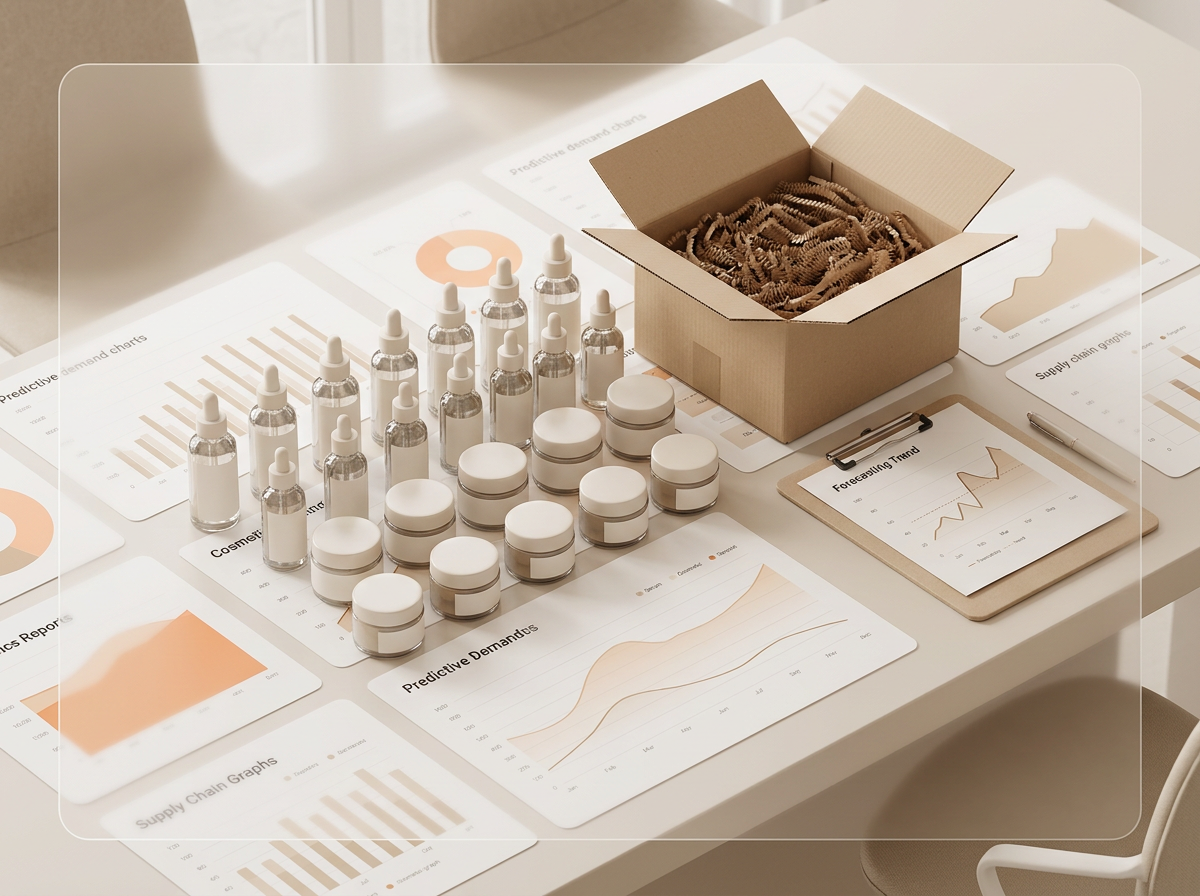
Predictive Analytics: The New Secret Weapon for Beauty Brands in 2026

In 2026, beauty brands face a staggering challenge: an estimated 30% of their ad budget is squandered on ineffective campaigns, while nearly 40% of consumers experience product unavailability at crucial moments. Enter predictive analytics—an advanced weapon revolutionizing how beauty companies operate. By harnessing data-driven insights, brands are now halting both wasted ad spend and frustrating inventory stockouts.
Predictive analytics allows brands to dive deep into consumer behavior, using intricate algorithms to anticipate demand shifts and customer needs. For instance, by mining TikTok data for emerging micro-trends, a serum that’s suddenly going viral can be stocked and marketed with pinpoint accuracy before competitors can even react. Meanwhile, the same algorithms are being used to predict precisely when a consumer will run out of their go-to serum, thus triggering timely, personalized re-order reminders that significantly increase sales.
The blending of predictive analytics with real-time social media data provides brands not only the foresight to prepare but also the agility to adapt, curtailing both excess ad spend and the age-old pain of "out of stock" disappointments. As 2026 unfolds, those who master this technology will wield a decisive edge in the fiercely competitive beauty market.
Predictive Analytics: The New Secret Weapon for Beauty Brands in 2026
In an era where customers expect personalized experiences, the application of predictive analytics has emerged as a pivotal tool for beauty brands aiming to stay competitive. As CMOs, embracing predictive analytics isn’t just an option; it’s an imperative strategy for success. Predictive analytics allows us to anticipate trends, tailor marketing strategies, and personalize customer interactions in unprecedented ways, thereby creating significant competitive advantages.
The reality is that we are currently swimming in vast amounts of data and the ability to harness this data effectively is what separates the leaders from the laggards. In a recent study, Gartner found that companies using predictive analytics to drive decisions will increase their profitability by up to 20% by 2025. This highlights the tremendous financial impact that the right predictive analytics implementation can have on our bottom line.
Moreover, a McKinsey report indicated that personalization can deliver five to eight times the ROI on marketing spend and lift sales by 10% or more. The beauty industry is uniquely poised to benefit from these insights. By using predictive analytics, we can better understand consumer behaviors, predict product demand, and even innovate new products based on emerging trends. This means that we can optimize inventory management, reduce waste, and ensure that our most-loved products are always available to our loyal customers.
Looking forward to 2026, the brands that master predictive analytics will not only meet consumer needs but anticipate them, delivering personalized, data-driven experiences that delight and retain customers. As CMOs, we must champion the integration of these advanced analytics into our strategic playbooks to keep our brands ahead of the curve and set the industry benchmark for innovation and customer satisfaction.
Predictive Analytics: The New Secret Weapon for Beauty Brands in 2026
In 2026, predictive analytics stands as a transformative force for beauty brands, empowering them to refine strategies and bolster profitability. The first major insight centers around supply chain optimization, a pivotal area where predictive analytics is revolutionizing traditional methodologies.
The Old Way vs The New Way
The old approach to supply chain management often relied on historical data, largely reactive, and focused on managing inefficiencies post-occurrence. For example, beauty brands traditionally depended on sales from previous years to forecast demand, which often led to overproduction or stockouts, adversely impacting margins. According to a 2024 report from McKinsey & Company, this reactive model frequently resulted in supply chain costs constituting up to 20% of sales revenue, reducing overall efficiency.
In contrast, the new way leverages predictive analytics to preempt and resolve supply-related challenges before they occur. Beauty brands utilize sophisticated algorithms to predict trends and preorder raw materials preemptively, thus aligning production schedules in real-time with consumer demand. For instance, Estée Lauder, having incorporated predictive analytics, achieved a 17% reduction in inventory holding costs by 2025, as reported by Gartner.
Enhanced Demand Forecasting
Predictive analytics empowers brands to enhance demand forecasting accuracy, thanks to machine learning models that analyze consumer trends, purchasing behavior, and even external socio-economic factors. Through precise demand forecasting, brands can maintain optimal inventory levels, reducing waste and ensuring that popular products are always available.
A practical example is the impressive case of Sephora, which implemented predictive analytics to anticipate the color and product preferences of its diverse customer base. By integrating data from transaction history, social media, and even weather patterns, Sephora achieved a 30% improvement in forecast accuracy by 2026, resulting in fewer stockouts and better customer satisfaction.
Predictive Lifetime Value
Moreover, predictive analytics extends beyond supply chain optimization to customer retention and predicting customer lifetime value (LTV). Traditionally, LTV estimations were based on past purchase behavior alone. However, predictive models now incorporate diverse data points, such as engagement metrics and demographic intricacies, allowing brands to tailor customer interactions and preemptively address churn risks. For instance, brands like L'Oréal have seen a substantial increase in customer loyalty programs' effectiveness by using predictive analytics to customize offers for high LTV customers.
In summary, predictive analytics in 2026 serves as a secret weapon for beauty brands, transforming supply chain efficiency and optimizing customer interactions. This leap from reactive to proactive management represents a paradigm shift, underscoring predictive analytics' critical role in driving operational excellence and customer satisfaction in the beauty industry.
Harnessing Consumer Insights through Predictive Analytics for Personalized Beauty Experiences
As beauty brands continue to navigate the evolving consumer landscape in 2026, predictive analytics has emerged as a pivotal tool in crafting personalized beauty experiences. By leveraging data-driven insights, these brands can anticipate consumer needs, improve product offerings, and optimize marketing strategies. This section explores frameworks and case studies that highlight how predictive analytics is transforming customer engagement in the beauty industry.
Frameworks for Personalization
- Data Collection & Integration
- Utilize diverse data sources, including social media interactions, purchase history, and browsing behavior.
- Integrate data into a centralized CRM system to build comprehensive consumer profiles.
- Segmentation & Analysis
- Apply machine learning algorithms to segment consumers based on preferences, buying habits, and demographic data.
- Use cluster analysis to identify trends and predict future consumer requirements.
- Personalized Recommendations
- Implement real-time recommendation engines on e-commerce platforms to suggest products tailored to individual profiles.
- Utilize natural language processing to analyze consumer reviews and tailor product development.
Case Study: L'Oréal's AI-Powered Beauty
L'Oréal, a front-runner in predictive analytics in the beauty sector, provides a sterling example of how brands can leverage these techniques for personalized consumer engagement.
- Virtual AI Consultants
- Launched an AI-driven skin diagnosis tool that uses predictive modeling to recommend skincare regimes based on skin type and environmental factors.
- The tool learns from each interaction, gradually enhancing its predictive accuracy.
- Consumer Journey Optimization
- L'Oréal employs predictive analytics to forecast purchasing patterns, refining inventory management and reducing wastage.
- They personalize email marketing campaigns by analyzing consumer interaction data, leading to a 20% increase in click-through rates.
Tactical Application and Best Practices
- Predictive Modeling for Inventory Management
- Use demand forecasting tools to predict stock requirements, aligning production with seasonal trends and marketing campaigns.
- Implement automated re-stocking protocols based on predictive analytics to avoid overproduction and stockouts.
- Customer Feedback Loops
- Establish continuous feedback mechanisms to gather data on consumer satisfaction, which can be analyzed to refine product offerings.
- Employ sentiment analysis to gauge consumer mood and adapt marketing strategies accordingly.
- Enhancing Omnichannel Experiences
- Integrate online and offline data to provide a seamless shopping experience, ensuring personalized service at every touchpoint.
- Predictive analytics can enrich in-store consultations, with beauty advisors using data-driven insights to offer targeted recommendations.
By embracing these methodologies, beauty brands can not only enhance consumer satisfaction and loyalty but also drive innovation in product development. As predictive analytics continues to evolve, its integration into the beauty industry's strategic toolkit is set to become indispensable, ensuring that brands remain competitive and attuned to the ever-changing desires of their consumers.
Missteps in Predictive Analytics: Unmasking the Overhyped Potential for Beauty Brands in 2026
While predictive analytics continues to be touted as the ultimate game-changer for beauty brands, a closer examination reveals that many businesses misinterpret its capacities, often leading to suboptimal outcomes. Proponents argue that predictive analytics can unlock unprecedented insights, yet, in practice, several brands falter by prioritizing analytics over authentic consumer interaction.
Foremost, beauty brands frequently fall victim to over-reliance on data-driven predictions without properly integrating human intuition and creativity. In 2026, as the industry increasingly leans on AI-driven models to project consumer preferences, brands may overlook the unpredictable and emotional nature of human behavior that these models struggle to encapsulate. A study by Gartner in 2025 highlighted that 62% of companies that integrated predictive analytics into their strategy experienced product misses due to a lack of qualitative insights. This statistic underscores the limitations of solely relying on quantitative analytics in a sector deeply rooted in personal and emotional experiences.
Additionally, data integrity and the quality of datasets remain a significant bottleneck. Many brands hastily adopt predictive tools without scrutinizing the completeness and accuracy of their data sources. For instance, The Forrester Tech Tide survey from April 2025 illustrated that 47% of companies reported implementation setbacks due to inadequate data frameworks and mislabeled datasets. Such challenges can skew analytics outputs, rendering predictions less actionable or, worse, detrimental.
Finally, the seductive promise of predictive analytics can seduce executives into investing heavily in technology without aligning it with the brand's broader strategic objectives. This misalignment can cause brands to chase data-driven trends at the expense of brand identity and long-term loyalty. By recognizing these pitfalls and adopting a balanced, human-centric approach, beauty brands can better harness the true potential of predictive analytics beyond the superficial allure.
Predictive Analytics: The New Secret Weapon for Beauty Brands in 2026
Predictive analytics is revolutionizing how beauty brands understand consumer behavior and optimize marketing strategies. Here's a practical guide to harness its power for your business:
1. Collect Quality Data
- Begin by gathering diverse datasets. This includes sales data, customer feedback, social media interactions, and website analytics.
- Use modern CRM systems to ensure data is structured and easily accessible for analysis.
2. Choose the Right Tools
- Select analytics platforms that suit your brand's needs. Popular tools in 2026 include AI-driven platforms like Tableau Advanced, SAP Analytics Cloud, and ThinkData Works.
- Ensure your chosen tool integrates well with existing systems for seamless data flow.
3. Define Clear Objectives
- Determine what you want to achieve – whether it's improving sales forecasts, enhancing customer experiences, or optimizing product development.
- Set measurable KPIs to track progress and success.
4. Segment Your Audience
- Use predictive algorithms to segment your customers based on behavior, preferences, and purchase history.
- Create personalized marketing and product recommendations for each segment.
5. Develop Predictive Models
- Work with data analysts to develop models that predict future trends, customer needs, and sales patterns.
- Utilize machine learning to refine these models continuously for increased accuracy.
6. Implement and Test
- Roll out predictive analytics insights in marketing campaigns and product launches.
- Conduct A/B testing to gauge the effectiveness of these insights.
7. Monitor and Adapt
- Continuously monitor the results and adapt strategies as needed.
- Stay updated with industry trends and advancements in predictive tech.
8. Educate Your Team
- Train employees on the importance of predictive analytics and how to use tools effectively.
- Foster a data-driven culture for continuous improvement.
By following these steps, beauty brands can leverage predictive analytics to stay ahead in a competitive market, anticipate consumer needs, and tailor their offerings for enhanced customer satisfaction.
Driving Success with Predictive Analytics
As beauty brands navigate an increasingly competitive landscape, the adoption of predictive analytics emerges as a vital strategy for staying ahead. With the ability to anticipate customer preferences, optimize marketing campaigns, and streamline product development, predictive analytics is revolutionizing the beauty industry in 2026. By harnessing this powerful tool, brands can drive innovation, enhance customer experiences, and ultimately boost their bottom line. Veilup stands ready to guide you through this transformative journey, utilizing AI-driven insights to craft tailored strategies that align with your brand's unique goals. Whether you're looking to refine your audience targeting, predict emerging trends, or evaluate the impact of new product launches, our data-driven approach ensures you can capitalize on every opportunity. Don't wait to leverage the full potential of predictive analytics for your brand’s success. *Book a free audit and we will show you where to start.*
More insights