Meta's TRIBE v2: How to Use Brain-Response AI to Dominate Beauty Ads in 2026

Most beauty brands are still running Meta ads the same way they did in 2023. They build a creative, pick an audience, set a budget, and hope the algorithm figures it out. Meanwhile, Meta just released a model that can predict exactly how a human brain responds to your ad — before you spend a single dollar. It's called TRIBE v2, and it was quietly open-sourced on March 26, 2026. If you're running paid social for a cosmetics brand and haven't heard of it yet, that's your competitive gap.
The Problem: Beauty Brands Are Still Guessing on Creative
Most ad creative decisions in the beauty industry are still made by gut feel. A CMO likes a particular shade gradient. A founder thinks the UGC clip feels "more authentic." A media buyer picks the shorter cut because it tested better six months ago on a different product. None of these decisions are informed by how a brain actually processes what it sees.
The consequences are expensive. Beauty and personal care brands on Meta average a median ROAS of just 1.57x, according to 2026 benchmark data from AdAmigo. Top-performing brands hit 4x–6x. That gap isn't explained by budget — it's explained by creative quality and relevance. Brands that consistently win on Meta are producing content that triggers the right neural responses: attention, desire, trust. They're doing it instinctively or through exhaustive testing. Most brands can't afford either.
Traditional neuromarketing — the science of measuring brain responses to advertising — has existed for over two decades. But a full fMRI study costs upwards of $50,000, takes months to run, and requires a neuroscience research team to interpret. For a DTC skincare brand operating on lean margins, that's simply not an option. The result: an entire discipline of advertising science that only Fortune 500 companies could access. Until now.
Why TRIBE v2 Changes Everything Right Now
Meta's Fundamental AI Research (FAIR) team released TRIBE v2 just days ago — a foundation model trained on over 1,115 hours of fMRI brain data from more than 700 volunteers. The model predicts how the human brain responds to visual, auditory, and language stimuli at a resolution 70 times higher than the original TRIBE model. Where TRIBE v1 predicted activity across roughly 1,000 brain voxels, TRIBE v2 maps approximately 70,000 — moving from coarse approximation to near-clinical precision.
What makes this immediately relevant for beauty advertisers isn't just what the model can do in a lab. It's what it signals about the direction Meta is heading. TRIBE v2 is open-source, meaning it will be integrated into third-party creative intelligence tools within months. It's also the scientific foundation for Meta's broader ambition: by the end of 2026, Meta has confirmed that every ad across Facebook and Instagram will be fully generated and optimized by artificial intelligence.
Mark Zuckerberg laid it out plainly: "You're a business, you come to us, you tell us what your objective is, you connect to your bank account — you don't need any creative, you don't need any targeting demographic, you don't need any measurement, except to be able to read the results that we spit out." Meta made Advantage+ the default setting for all new ad campaigns in December 2025. This isn't a future vision — it's the infrastructure being built right now.
For beauty CMOs, this creates both an urgent opportunity and a serious risk. The brands that understand how to feed this system correctly will compound their advantage. The brands that don't will find themselves outspent by the algorithm itself.
How to Actually Use TRIBE v2 Intelligence for Your Beauty Ads
TRIBE v2 doesn't have a plug-and-play Ads Manager integration yet. But understanding what it reveals — and how to act on it now — is the entire edge. Here's how forward-thinking beauty brands should be thinking about this:
1. Pre-Test Creative for Neural Engagement Before You Spend: TRIBE v2 can model how the brain responds to video, imagery, and audio stimuli without running a single fMRI scan. Third-party neuromarketing platforms are already building on top of this research. Tools like Neurons and Brainsights use comparable brain-response modeling to score ad creatives on attention, emotional engagement, and memory encoding before they go live. Brands using pre-tested creative report 30–40% fewer wasted impressions on low-performing variants. For a beauty brand spending $50k/month on Meta, that's $15,000–$20,000 recovered before a single impression runs.
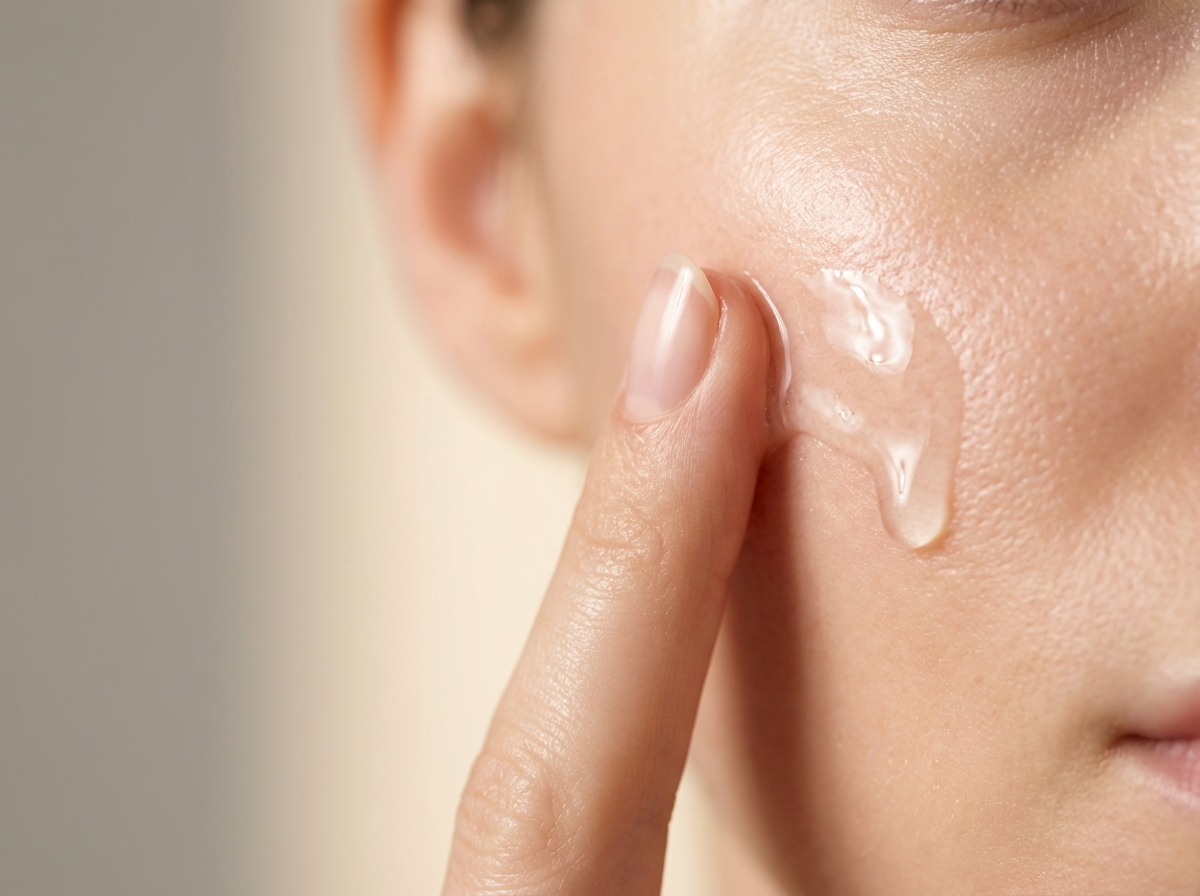
2. Align Your Creative to How the Brain Processes Beauty Content: TRIBE v2 research confirms what top beauty advertisers have already discovered empirically — demonstration creatives dominate. According to 2026 Meta performance data, product application and "how to use" formats appear in nearly 4 out of 10 winning beauty ads. The brain is wired to mirror what it sees. When a viewer watches a foundation being blended or a serum being pressed into skin, their motor cortex activates — creating a stronger purchase signal than static imagery ever could. This is no longer a hypothesis. It's measurable at 70,000 brain voxels.
3. Structure Your Advantage+ Inputs Around Neural Priorities: Meta's Advantage+ AI is already generating and selecting creative variants autonomously. Brands using Advantage+ Shopping campaigns see an average 12% lower cost per action and 15% higher ROAS compared to manual campaigns (Meta, 2026). But the system is only as good as the raw materials you feed it. Give it a wide variety of inputs — close-up texture shots, before/after transitions, founder testimonials, application demos, UGC — and TRIBE v2-informed research tells you which formats trigger the strongest neural engagement. FULLBEAUTY Brands saw a 45% jump in ROAS after deploying AI-generated creative variations through Advantage+. The input quality is what separates a 45% lift from a 10% one.
4. Use Computational Neuromarketing to Validate Packaging and Brand Imagery: TRIBE v2's ability to predict brain responses to visual stimuli extends beyond video ads. Product packaging, hero imagery, and brand color systems all generate measurable neural responses. Cosmetics brands like Charlotte Tilbury have invested heavily in packaging psychology. Now, brands at any budget level can run computational scans of their visual identity against TRIBE v2-style models before committing to a photoshoot or repackaging decision. A wrong shade palette or visual hierarchy in your product imagery can suppress click-through rates by 15–20% — a cost that compounds across every campaign you run.
5. Build Your First-Party Data Infrastructure Before Full Automation Arrives: When Meta's fully automated ad system goes live at scale in late 2026 — where you submit a URL and a budget and the AI does the rest — the differentiator won't be who has the best creative team. It will be who has the richest first-party data. Meta's AI personalizes ad delivery in real time using behavioral signals, purchase history, and engagement data. The brands feeding it high-quality customer data — email lists, purchase segments, LTV cohorts — will receive exponentially better results than brands feeding it nothing. Start building that infrastructure now.
What Beauty CMOs Should Do This Quarter
The window to get ahead of this is narrow. Here's where to focus immediately:
1. Audit your current Meta creative library against TRIBE v2 neural principles — prioritize demonstration formats, close-up sensory content, and motion over static imagery.
2. Run at least 6–8 creative variants in your next Advantage+ campaign to give the algorithm sufficient signal to optimize against.
3. Explore neuromarketing tools built on brain-response modeling (Neurons, Brainsights, or similar) to pre-score your top creative concepts before spend.
4. Begin consolidating your first-party customer data into Meta's Customer List audiences — purchase segments, loyalty tiers, high-LTV cohorts — before full automation makes this the primary differentiator.
5. Stop treating creative testing as a media cost and start treating it as a research investment. TRIBE v2 means the science now exists to make that testing systematic.
The Brands That Win Will Move Now
TRIBE v2 represents a fundamental shift in what's scientifically possible in advertising — not in five years, but today. The cost barrier to neuromarketing just collapsed. The brands that move first to align their creative strategies with how the human brain actually processes beauty content will build an advantage that compounds with every campaign cycle.
Meta's full AI automation is coming whether you're ready or not. The question is whether your creative intelligence, your data infrastructure, and your understanding of neural engagement are strong enough to win when the algorithm is running the show. Brands that treat TRIBE v2 as a research curiosity will lose ground to brands that treat it as a strategic asset.
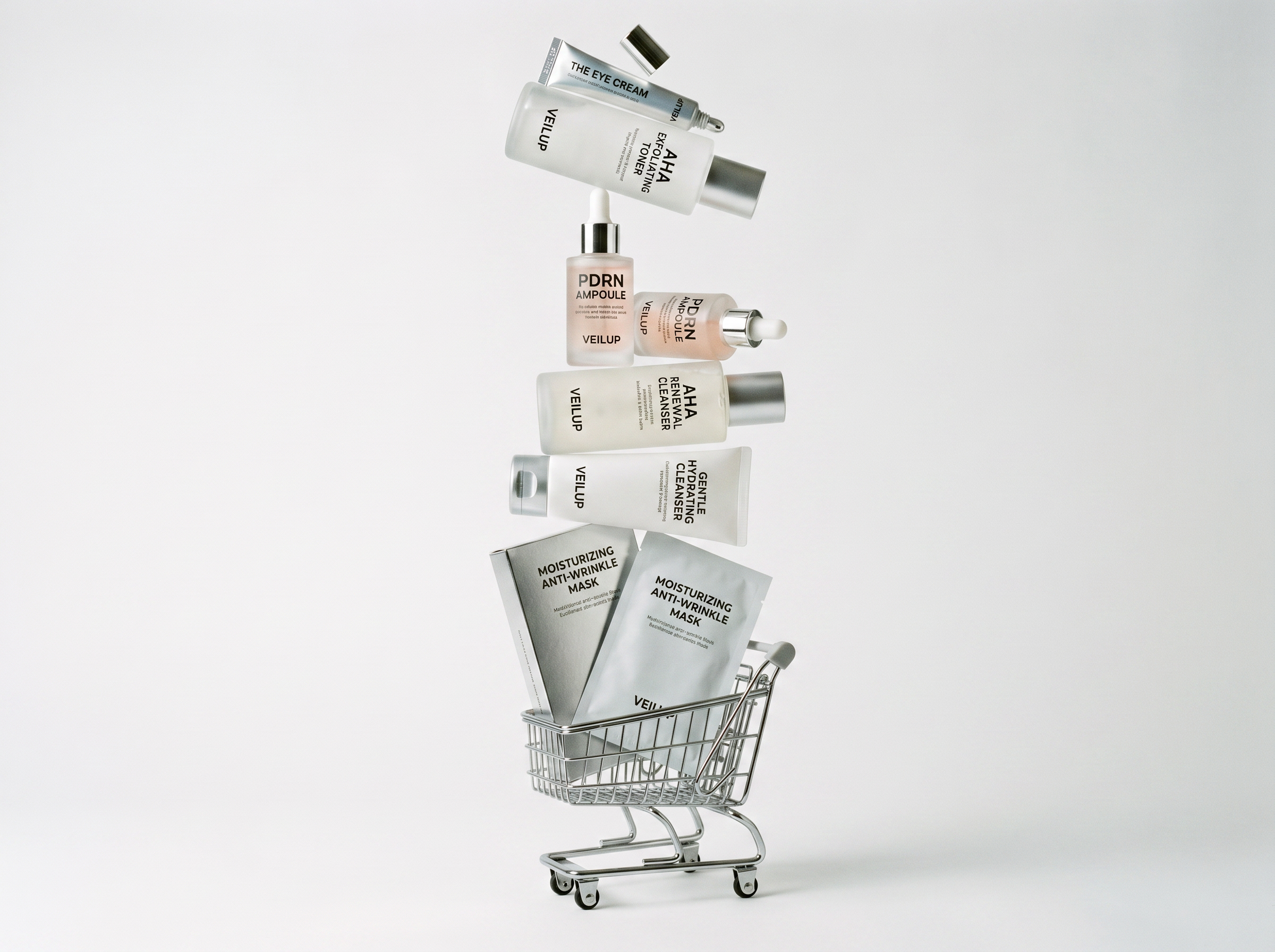
At Veilup, we work exclusively with cosmetics and skincare brands navigating exactly this shift — building AI-driven creative systems that perform at the neural level, not just the click level. The brands moving fastest right now aren't waiting to understand this technology. They're already deploying it.
More insights