
What Most Agencies Get Wrong About Marketing Korean Skincare Brands
Korean skincare is not a trend. It is a $11.9 billion industry growing at 6.1% annually, projected to hit $21.5 billion by 2036. South Korea is now the number two cosmetics exporter in the world, shipping $3.61 billion in Q1 2025 alone—nearly matching the United States.
But here is the problem. Most performance marketing agencies treat K-beauty brands the same way they treat every other DTC product. Same playbook. Same ad structures. Same creative frameworks. And it does not work.
Korean skincare operates under a completely different set of rules. The consumer psychology is different. The content expectations are different. The platform dynamics are different. And if you do not understand those differences, you will burn budget faster than you can measure it.
This is what we have learned from actually running campaigns in this space—and what most agencies never figure out.
The Korean Consumer Is Not Your Typical DTC Buyer
In the United States, a skincare purchase is often emotional and impulse-driven. Someone sees an ad, the before-and-after looks convincing, they click, they buy. The purchase cycle is short.
Korean consumers are different. South Korea has more than 28,000 licensed cosmetics sellers—nearly double the number from five years ago. Korean consumers spend more per capita on beauty than any other country on earth. That level of market saturation creates a buyer who is educated, skeptical, and methodical.
They do not buy because an ad told them to. They buy because:
- An ingredient list checks out against what they already know
- Multiple creators they trust have used and reviewed the product
- The texture, the "after feel," and the sensory experience match their expectations
- The brand has clinical backing or dermatologist endorsement
This means your standard direct-response creative—big hook, bold claim, strong CTA—falls flat. It feels like shouting in a room where everyone is already having a sophisticated conversation.
The shift you need to make: education-first creative. Lead with ingredients, not promises. Show texture, not testimonials. Demonstrate expertise, not hype.
TikTok Is the Discovery Engine—But Not the Way You Think
Every agency knows TikTok matters for beauty. That is not insight. The insight is in how Korean skincare brands use TikTok differently than Western brands.
K-beauty hashtags on TikTok surged from 144,000 in early 2023 to over 500,000 by late 2023. K-beauty sales on TikTok Shop grew 132% year-over-year in 2025, outpacing the platform's already strong 120% overall growth. The channel is massive and accelerating.
But the content that drives those numbers looks nothing like typical paid ads. The winning format is not polished brand content. It is:
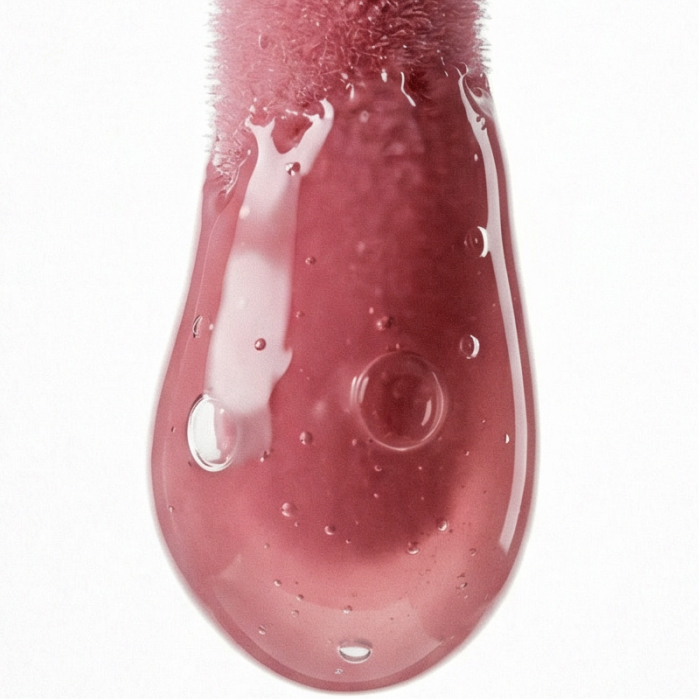
- Close-up texture shots of products being applied to skin
- "Get ready with me" routines where the product appears naturally within a 10-step regimen
- Dermatologist reaction videos breaking down ingredient lists
- No-makeup makeup tutorials that feature skincare as the foundation
- Side-by-side ingredient comparisons against competitor products
The content that converts feels less like advertising and more like a trusted recommendation from someone who genuinely understands skincare. This is not accidental. It is a deliberate strategy.
The Dual-Platform Play
The smartest Korean brands run a dual-platform strategy: TikTok for discovery, Amazon or DTC for conversion. They generate awareness through organic and paid TikTok content, then capture purchase intent on Amazon where the buying infrastructure is already built.
Meta has made this even more seamless. Shoppers can now buy directly from Instagram and Facebook ads with live pricing, Prime eligibility, and delivery estimates—without ever leaving the app. This collapses the funnel from "I saw this on TikTok" to "it is at my door" into a single session.
If you are running campaigns for a Korean skincare brand and you are not building this cross-platform bridge, you are leaving money on the table.
The Two Influencer Models That Actually Work
Influencer marketing for K-beauty is not optional. It is the primary acquisition channel. But there are two distinct models, and most agencies only know one.
Model 1: Mass Gifting
This is the volume play. COSRX—one of K-beauty's biggest success stories—distributed their Snail Mucin essence to thousands of micro-influencers. No contracts. No scripts. Just product in exchange for honest reviews.
The result was a flood of authentic, UGC-style content across TikTok and Instagram that felt organic because it was organic. When thousands of real people are talking about the same product without a brand script, the algorithm rewards it and consumers trust it.
This works when:
- Your product has a strong "wow factor" on camera (texture, application, visible results)
- You have margins that support high-volume gifting
- You are building initial awareness in a new market
Model 2: Targeted Creator Partnerships
This is the precision play. TirTir, for example, partnered strategically with specific creators like Miss Darcei to address diversity in beauty standards. Instead of wide distribution, they chose creators whose audiences and values aligned with the brand's positioning.
The content that came from these partnerships generated deeper conversations—not just about the product, but about what the brand stands for. That kind of content has a longer shelf life and builds brand equity, not just sales.
This works when:
- You need to shift perception or enter a new demographic
- Your product requires explanation or education
- You are building long-term brand value alongside performance
The best campaigns combine both. Mass gifting for volume and awareness. Targeted partnerships for depth and positioning. Running one without the other leaves half the opportunity untouched.
The Ingredient Trend You Cannot Ignore
Performance marketers rarely think about product trends. That is a mistake in K-beauty. The ingredient that is trending directly impacts what messaging works, which audiences respond, and what creative angles convert.
Right now, the Korean market is in the middle of a "medicosmetic pivot." Consumers are demanding clinical-grade ingredients in their everyday skincare. The ingredients dominating search and purchase data:
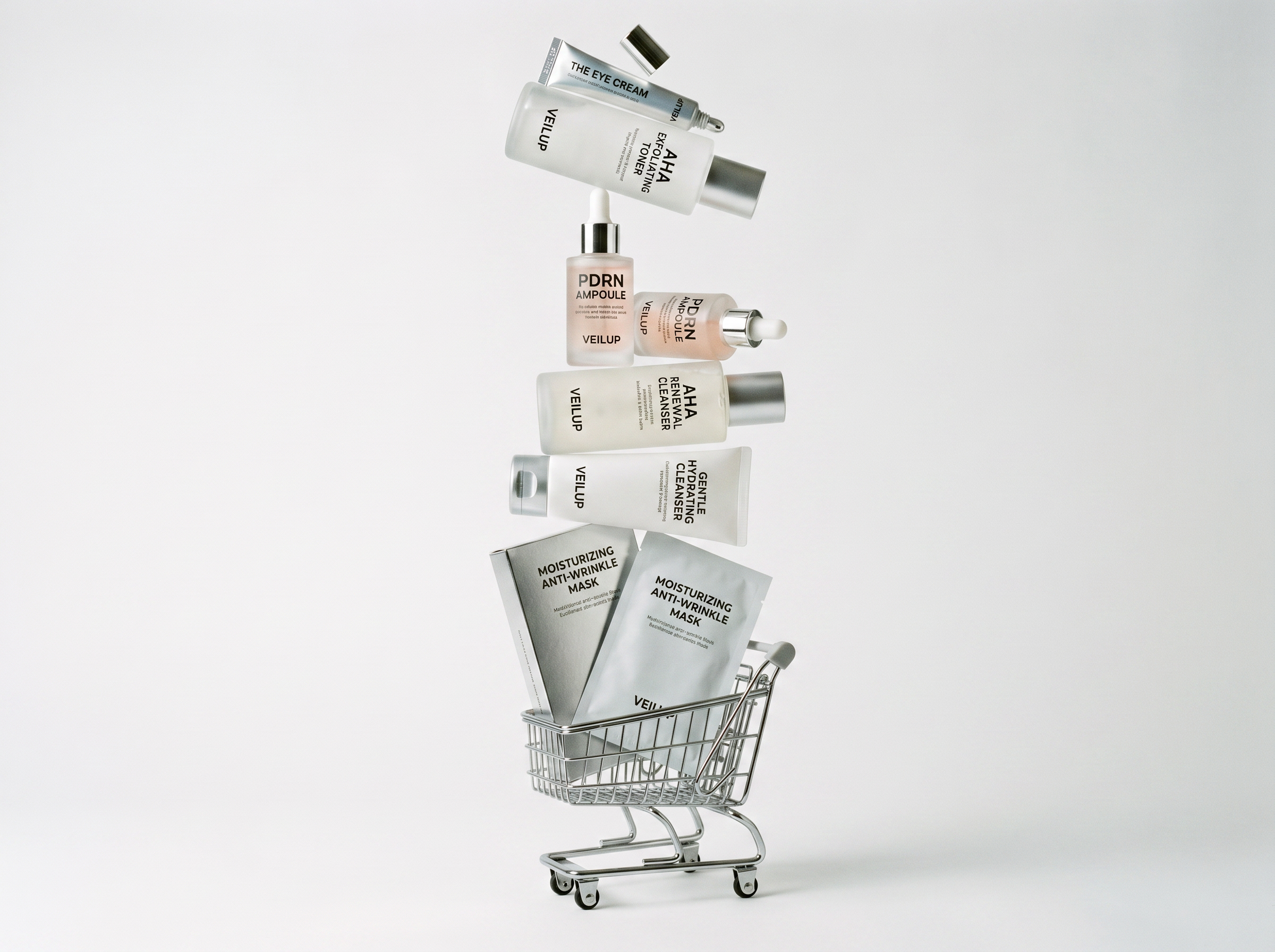
- PDRN (polydeoxyribonucleotide) — skin regeneration
- Exosomes — cellular communication and repair
- Tranexamic acid — hyperpigmentation treatment
- Dexpanthenol — barrier repair
- EGF (Epidermal Growth Factor) — anti-aging
This is not niche. This is mainstream Korean skincare moving toward dermatological territory. And it changes the performance marketing playbook entirely.
Why? Because the creative that sells a PDRN serum is fundamentally different from the creative that sells a basic moisturizer. Your hooks need to reference clinical efficacy. Your ad copy needs to speak the language of ingredients, not generic beauty claims. Your landing pages need to feel like a dermatologist's recommendation, not a lifestyle brand's homepage.
Brands like Medicube understand this perfectly. Their AGE-R Booster Pro—an at-home skincare device—landed a Kylie Jenner promotion not by positioning it as a beauty product, but as a clinical tool. That positioning is what makes the product believable to an educated K-beauty consumer.
If your agency is writing ad copy that says "get glowing skin" for a brand selling exosome serums, you have already lost.
Why "After Feel" Is Your Most Important Creative Concept
Here is a concept that almost no Western performance marketer understands: "after feel."
In the Korean skincare market, sensory texture is one of the top purchase drivers. Consumers do not just want a product that works—they want a product that feels memorable on their skin. The cooling sensation. The way it absorbs. The finish it leaves.
This is why close-up texture shots perform so well on TikTok. It is why unboxing and first-application videos get higher engagement than testimonials. The consumer is trying to experience the product through the screen before they buy.
For performance marketers, this means:
- Video ads should prioritize texture and application footage over talking heads
- Sound design matters—the sound of product being dispensed, applied, and absorbed is ASMR-adjacent and drives engagement
- "First impression" reaction content outperforms structured reviews
- Cooling, soothing, and refreshing sensations should be explicitly shown, not just described
If you are running static image ads for a Korean skincare brand, you are ignoring the single most persuasive element in the buyer's decision process.
For brands launching a new product, a short cinematic launch video built around texture and first use can carry that feeling further. Studios like Flowjam specialise in these.
The Platform Mix That Works Right Now
Based on what is actually performing in 2026, here is the platform allocation that makes sense for Korean skincare brands entering or scaling in Western markets:
TikTok (40-50% of spend)
Primary discovery channel. Focus on:
- TikTok Shop integration for direct purchase
- Creator partnerships (both mass gifting and targeted)
- Spark Ads amplifying top-performing organic content
- Hashtag challenges around specific routines or ingredients
Meta / Instagram (30-35% of spend)
Conversion and retargeting engine. Focus on:
- Reels repurposed from TikTok (with platform-native editing)
- Dynamic product ads for retargeting
- Instagram Shopping integration
- Lookalike audiences built from TikTok-driven purchasers
Amazon Ads (15-20% of spend)
Bottom-funnel capture. Focus on:
- Sponsored Products for branded and ingredient-based keywords
- Sponsored Brands for category presence
- Amazon Posts for social-style content within the marketplace
Google / YouTube (5-10% of spend)
Brand protection and long-form education. Focus on:
- Branded search capture
- YouTube Shorts repurposed from TikTok
- "Best Korean skincare" and ingredient-specific keyword campaigns
This is not a rigid formula. It shifts based on the brand's maturity, product category, and target market. But it is a starting framework that reflects where K-beauty consumers actually discover and purchase products.
What This Means for Your Brand
If you are a Korean skincare brand—or you are marketing one—the rules of engagement are specific and non-negotiable:
Lead with education, not hype. Your consumer is too sophisticated for empty claims. Show ingredients, show clinical backing, show the texture.
Build for TikTok-first, but convert everywhere. Discovery happens on TikTok. Purchase happens wherever the friction is lowest. Build the bridge between them.
Invest in creator relationships, not just ad spend. The most effective content in this space comes from creators, not brands. Your job is to enable them, not script them.
Follow the ingredient cycle. What is trending in Seoul today is trending in Los Angeles in six months. If you are not tracking Korean skincare trends in real time, your creative will always be six months behind.
Prioritize sensory content. Texture, application, after feel. This is what sells Korean skincare. Not logos, not lifestyle shots, not celebrity endorsements from people who clearly do not use the product.
The K-beauty market is growing fast and getting more competitive by the month. The brands that win will not be the ones with the biggest budgets. They will be the ones with the smartest systems—systems that produce the right content, on the right platforms, with the right creative frameworks, at the speed the market demands.
*Scaling a Korean skincare brand and need a performance marketing system that actually understands the space? Book a free audit and let us show you what is possible.*
More insights