
Large Skincare Brands Are Losing to Indies at 4x the Growth Rate. Here's the Marketing Playbook That Closes the Gap.

Indie beauty brands grew dollar sales 22.3% year over year. Conglomerates grew 6.1%. That's not a rounding error — it's a 4x growth gap that's been widening for three consecutive years.
The numbers get worse when you break them down by category. In facial skincare, indies grew 23% versus 3% for conglomerates. In cosmetics, 21% versus 4%. Indies have reached $40 billion in annual sales and now command a 32% dollar share of the total beauty and personal care market — up from roughly 25% just two years ago.
If you're running marketing for a large skincare brand, you already feel this. Your campaigns still hit reach targets. Your retail distribution is still broader. Your budgets are still bigger. And somehow, a brand that launched eighteen months ago with a TikTok account and a Shopify store is growing faster than your hero SKU.
The problem isn't your budget. It's your operating model. And fixing it requires rethinking how large brands approach creative production, channel strategy, measurement, and speed — the four areas where indie agility is eating enterprise scale for breakfast.
The Speed Gap Is the Real Threat
Large skincare brands don't lose because they lack resources. They lose because their resources move slowly.
A typical creative production cycle at an enterprise beauty brand looks like this: brief development (2 weeks) → agency kickoff (1 week) → concept development (2-3 weeks) → internal review rounds (2-3 weeks) → legal and compliance (1-2 weeks) → final production (2 weeks) → trafficking and launch (1 week). Total time from idea to live ad: 10-14 weeks.
An indie brand's founder shoots a video on their phone explaining why they chose a specific peptide concentration, posts it as a TikTok and runs it as a Meta ad the same day. Total time: 2 hours.
When TikTok rewards the first brand to comment on a trending ingredient or debunk a skincare myth, 10-14 weeks might as well be 10-14 years. The trend is dead before the enterprise brand's brief clears the first review cycle.
This isn't just about social media trends. Speed to market in manufacturing is shifting too. Beauty manufacturing in 2026 increasingly favors partners and operating models built for speed, flexibility, and control — not scale alone. Indie brands can launch limited-edition products that fill market gaps before a large brand's product development committee has its second meeting.
The fix isn't to eliminate review processes entirely. It's to build parallel creative tracks — one for high-production brand campaigns that go through full review, and one for agile, always-on content that operates with pre-approved brand guardrails and moves at platform speed.
Your Martech Stack Is a Tax on Performance
Here's a number that should alarm every enterprise CMO: companies lose an average of $21 million per year on unused SaaS licenses. And 47% of martech decision-makers cite stack complexity and system integration challenges as the primary blockers preventing them from getting value from their tools.
Large skincare brands are particularly vulnerable. A typical enterprise beauty stack includes a CDP, a DAM, an email platform, a social management suite, an analytics platform, a creative asset management tool, attribution software, a loyalty platform, and multiple agency dashboards. These systems were purchased individually to solve individual problems. Together, they create what the industry calls system fragmentation — and beauty brands lose an estimated $300,000+ annually just from the operational friction it causes.
Meanwhile, an indie brand runs Shopify, Klaviyo, Meta Ads Manager, and a Google Sheet. Four tools. Total monthly cost: under $500. And they have clearer data, faster execution, and better attribution than the enterprise brand spending $200,000/month on marketing technology.
The Fix: Consolidate Around Outcomes, Not Features
The answer isn't buying more tools. It's ruthlessly consolidating around the three things that actually drive revenue:
- Customer data platform that feeds creative and media. One system that collects first-party data and makes it actionable for both ad targeting and content personalization. Not a CDP that sits in a silo generating reports nobody reads.
- Creative production system that outputs at platform speed. AI-powered node-based workflows that produce on-brand variants at the volume modern platforms demand, without routing every asset through a 6-week approval chain.
- Measurement framework built on incrementality, not attribution. Media mix modeling that understands how digital drives in-store lift (digital media drove 18% of in-store lift according to real-world MMM studies), not last-click attribution that credits Google Shopping for a sale that TikTok actually generated.
Everything else is optional. If a tool doesn't directly feed one of these three functions, question whether you need it at all.
The Channel Strategy That Enterprise Brands Get Wrong
Large skincare brands have a distribution advantage that indies would kill for: retail presence. Sephora, Ulta, Target, Nordstrom — these shelf placements are competitive moats that take years and significant capital to secure.
But most enterprise brands treat digital and retail as separate marketing universes. The digital team optimizes ROAS on Meta. The retail team negotiates endcap placements. The two teams rarely share data, rarely coordinate messaging, and rarely measure the same outcomes. The result is a fragmented customer experience and wasted spend.
The Omnichannel Reality
The beauty purchase path in 2026 has fractured. Discovery, evaluation, and transaction rarely happen in the same place. A consumer discovers your product on TikTok, reads reviews on Reddit, compares ingredients on a third-party app, and buys at Sephora. Metrics that credit only the final interaction overlook the work that shaped intent earlier.
The enterprise brands winning this game are the ones treating every channel as part of a single system:
- Retail media networks are now a must-invest channel. Spending on RMNs is expected to hit $62 billion in 2025, growing from 18% to 20% of total digital ad spend. For skincare brands with retail distribution, this is the highest-intent advertising channel that exists — you're reaching shoppers who are literally browsing the beauty aisle (physically or digitally).
- CTV is becoming a performance channel, not just a brand channel. 57% of CTV viewers are influenced by the offers they see, and 56% of marketers plan to increase OTT/CTV budgets. For large skincare brands, CTV bridges the gap between brand awareness (traditional TV's strength) and measurable performance (digital's strength) in a single buy.
- Social commerce is closing the discovery-to-purchase gap. TikTok Shop, Instagram Checkout, and YouTube product tagging let consumers buy without leaving the platform where they discovered the product. Large brands that still route every conversion through their own e-commerce site are adding unnecessary friction.
The strategic question isn't "which channels should we be on?" — you should be on all of them. The question is: "how do we measure the combined impact and allocate budget based on incrementality rather than channel-level ROAS?"
Creative Production Needs a Factory Model, Not an Agency Model
Here's the uncomfortable truth about enterprise creative production: the traditional agency model was built for an era when brands needed 12 TV spots per year. In 2026, Meta alone recommends refreshing creative every 2-4 weeks. TikTok rewards daily posting. Google's Performance Max needs dozens of asset variations to optimize effectively.
At enterprise scale, that means producing hundreds — sometimes thousands — of creative assets per month. The agency model, with its account managers, creative directors, internal presentations, and billable hours, cannot produce at that volume without either bankrupting the brand or sacrificing quality.
The Hybrid Model That Works
The most effective enterprise skincare brands in 2026 have split their creative operations into two tracks:
Track 1 — Brand Campaigns (Agency-Led)
Seasonal launches, hero product campaigns, retail activations. These get the full agency treatment — strategic planning, high-production value, multi-round creative review. 2-4 campaigns per year. This is where you invest in brand equity and emotional storytelling.
Track 2 — Performance Content (System-Led)
Always-on ad creative, social content, UGC amplification, product education, A/B test variants. This gets produced through an AI-powered creative system with brand guardrails baked in — pre-approved templates, locked brand elements, automated QA. Volume: 50-200+ assets per month.
Track 2 is where large brands can match indie speed. By 2026, 40% of all video ads are expected to be AI-generated. The brands that have built systems to produce this content on-brand and at scale reclaim the speed advantage without giving up brand consistency.
Demonstration creatives dominate beauty ad performance — showing products being applied, blended, or used by real people appeared in nearly 4 out of 10 top-performing beauty ads this year. These don't require $50,000 production budgets. They require a system that produces authentic content at volume.
First-Party Data Is Your Moat (If You Actually Use It)
Large skincare brands sit on a goldmine of first-party data that most indie brands would kill for: purchase history across channels, loyalty program data, skin consultation results, product review data, return reasons, customer service interactions, email engagement patterns.
The problem? Most enterprise brands still underutilize this data, relying too heavily on third-party sources that are becoming unreliable due to privacy regulation. The infrastructure exists to collect it. The organizational will to activate it often doesn't.
The Data Plays That Move the Needle
- Replenishment prediction. You know when a customer bought a 50ml moisturizer. You know the average usage rate. Trigger a personalized reorder reminder before they run out — via email, SMS, or paid media retargeting. This alone can increase repeat purchase rates by 25-30%.
- Cross-category recommendation. A customer who bought your vitamin C serum is statistically likely to need a sunscreen and a hydrating toner. Recommend the full routine, not just the next product on your promotional calendar.
- Loyalty-driven content. One beauty brand watched paid social CPAs spike 40% in six months. Instead of chasing algorithm changes, they invested in a loyalty-driven content hub with tutorials, community forums, and exclusive launches. Within 18 months, it became their highest-converting channel at one-tenth the cost of paid social.
The brands that win in 2026 aren't the ones with the biggest ad budgets. They're the ones with the most actionable customer data — and the systems to act on it faster than quarterly planning cycles allow.
What This Strategy Does NOT Fix
This playbook doesn't solve product innovation gaps. If your R&D pipeline is producing "me-too" formulations while indie brands launch novel active ingredients, no amount of marketing infrastructure will compensate. Marketing amplifies product-market fit. It doesn't create it.
It also doesn't fix organizational culture. If your marketing org requires 14 approvals to post a TikTok, the problem isn't your tools — it's your governance model. Technology can't fix politics.
And it won't produce results in 90 days. Rebuilding creative production, consolidating martech, implementing incrementality measurement, and activating first-party data are 6-12 month transformations. The brands that start now will have the system in place by Q4. The ones that wait for next year's planning cycle will watch the indie gap widen further.
The Window for Course Correction Is Open — But Narrowing
Indie skincare brands have structural advantages that are real: speed, authenticity, founder-led storytelling, cultural agility. Large brands can't replicate those advantages. But they can neutralize them by building systems that deliver enterprise-grade creative at indie-grade speed, measuring what actually drives revenue rather than what's easiest to attribute, and turning the first-party data that only large brands have into a compounding competitive moat.
The 4x growth gap isn't destiny. It's a symptom of operating models that haven't evolved as fast as the market. Fix the model, and the gap closes.
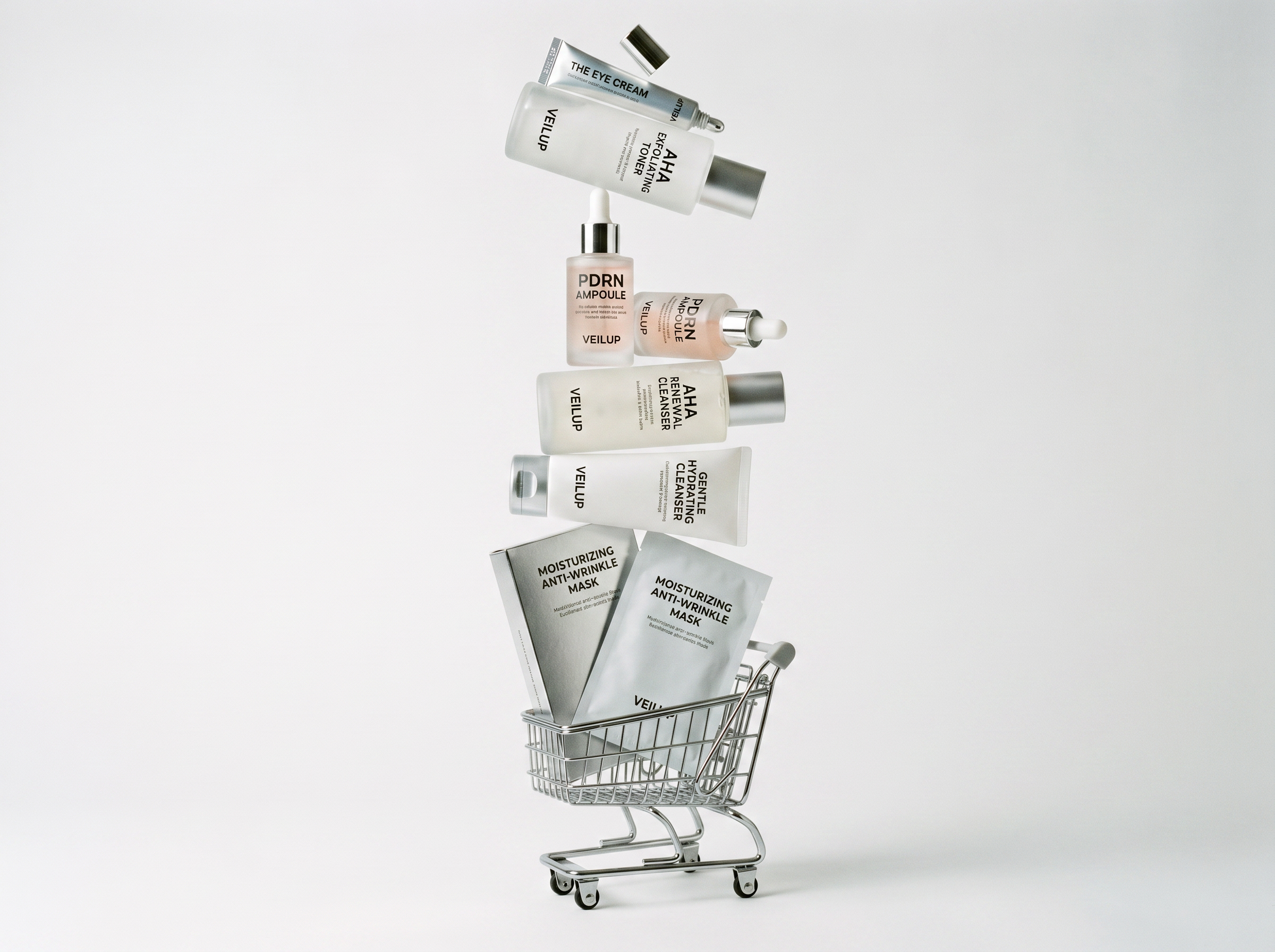
Veilup builds the creative and performance infrastructure that lets large skincare brands move at indie speed without sacrificing brand integrity. We've done this for enterprise beauty — from AI-powered creative production to incrementality measurement to full-funnel media architecture. Book a free audit and we'll show you exactly where your operating model is costing you market share.
More insights