Amazon Full-Funnel Marketing for K-Beauty: How to Combine Amazon DSP and Sponsored Ads in 2026

Most K-beauty brands on Amazon treat advertising as a single lever: Sponsored Products. When sales slow, they raise bids. When ACoS climbs, they cut them. The account swings back and forth, and the brand never really grows past the shoppers who were already searching for it.
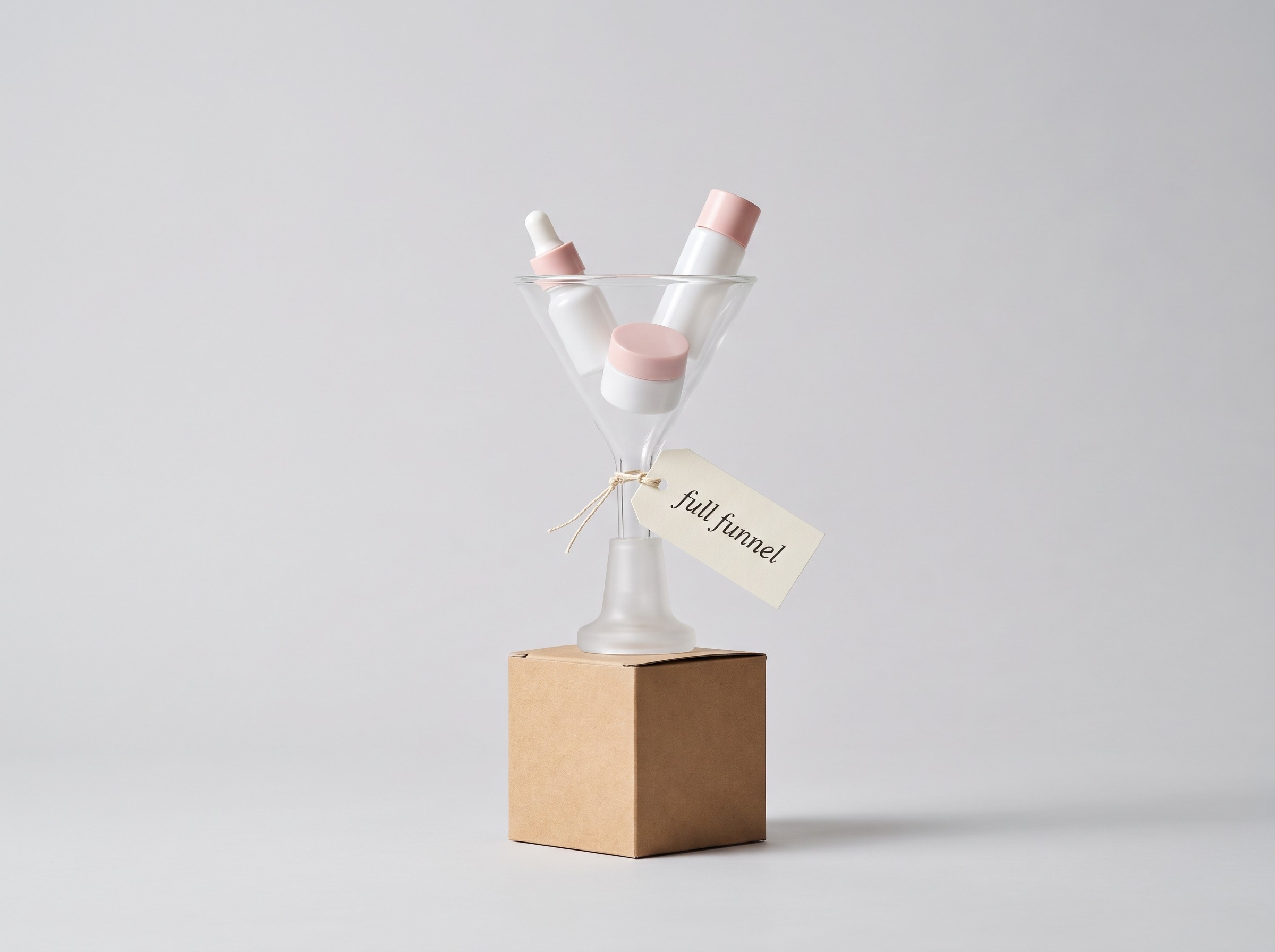
The brands scaling on Amazon in 2026 run advertising as a system. Amazon DSP creates demand, Sponsored Ads capture it, and first-party audiences connect the two so that every dollar spent at the top of the funnel makes the bottom of the funnel cheaper. This post lays out how that system works, how to split budget across it, and how to measure it without fooling yourself.
The Problem: Search-Only Accounts Hit a Ceiling
Sponsored Products is the best-converting ad format on Amazon, and that is exactly why it becomes a trap. It only reaches shoppers who are already typing a query. Once you own the relevant keywords, the only way to spend more is to bid higher on the same people.
For K-beauty, the ceiling arrives early. Category terms like "korean skincare," "snail mucin" and "centella serum" are crowded with established brands, and branded search for a newer K-beauty brand is usually a tiny share of total category searches. You can't capture demand that doesn't exist yet.
In our previous post on Amazon DSP, we covered what DSP is and the first campaigns to launch. This post zooms out: how DSP and Sponsored Ads fit together as one full-funnel plan.
What Full-Funnel Means on Amazon
Amazon is unusual because it owns every stage of the funnel in one ecosystem. A shopper can see your video on Prime Video, browse your Brand Store, read your reviews, add to cart and reorder, all without leaving Amazon. And Amazon can attribute each step.
Here is how the ad products map to each stage:
Awareness: Amazon DSP video and streaming TV (Prime Video, Fire TV, Twitch), plus DSP display on in-market and lifestyle audiences. Sponsored TV is a lighter self-serve option for streaming inventory.
Consideration: Sponsored Brands (including Sponsored Brands video), Sponsored Display on product and category targets, your Brand Store, and DSP retargeting of detail-page viewers.
Conversion: Sponsored Products on branded, category and competitor keywords, plus DSP and Sponsored Display retargeting of cart abandoners.
Loyalty: DSP and Sponsored Display retargeting of past purchasers for replenishment and cross-sell, plus Subscribe & Save and Brand Tailored Promotions.
The key idea: each stage feeds the next with an audience. Awareness builds viewers. Viewers become detail-page visitors. Visitors become buyers. Buyers become repeat customers. Your job is to make sure no audience is left without a follow-up.
5 Rules for Running Amazon DSP and Sponsored Ads as One System
1. Split budget by funnel stage, not by ad product: Decide what share of spend goes to creating demand versus capturing it. For an established K-beauty brand, a common starting point is roughly 60–70% Sponsored Ads and 30–40% DSP. For a new launch with little branded search, push more toward DSP and Sponsored Brands video early, then rebalance as branded search grows. Reviewing budget by stage stops the reflex of moving everything back into Sponsored Products the moment a week looks soft.
2. Close every audience loop: If you run awareness video, build a DSP audience of people who watched it and retarget them with display and Sponsored Display. If you run Sponsored Brands, retarget the shoppers who clicked but didn't buy. If you sell a toner, target its buyers with your serum before the bottle runs out. Audiences that see a brand at the top and never see it again are the most expensive impressions you'll buy.
3. Let DSP and search share keyword and audience insight: Your Sponsored Products search term report tells you which ingredient and concern phrases convert, for example "barrier repair" or "for sensitive skin." Use those angles in DSP creative. In the other direction, when a DSP prospecting audience lifts branded search, add the new branded and product-name variations to exact-match Sponsored Products campaigns so you capture that demand cheaply.
4. Sequence around tentpoles: Prime Day, Prime Big Deal Days, Black Friday and Cyber Monday reward brands that build demand in advance. A practical sequence: 3–4 weeks out, run DSP video and in-market prospecting; 1–2 weeks out, scale retargeting and Sponsored Brands; during the event, push Sponsored Products and deal-specific creative; after the event, retarget non-converters and new buyers. Brands that only turn on spend during the event pay peak CPCs for shoppers their competitors already warmed up.
5. Make the listing the center of the system: Every ad product above ends on your detail page or Brand Store. If the gallery images, A+ Content and reviews don't convert, every stage leaks. Before scaling DSP, make sure your top products convert well from organic and Sponsored Products traffic, because full-funnel spend multiplies the conversion rate you already have, good or bad.
How to Measure a Full-Funnel Program
The fastest way to kill a full-funnel program is to judge it by last-click ROAS. Upper-funnel DSP will always look weaker than branded search on that measure, because branded search is collecting the demand DSP created.
Track three layers instead. At the account level, watch total sales, TACoS (total ad spend divided by total sales including organic), and new-to-brand customers. If TACoS holds flat or falls while sales grow, the system is working. At the stage level, watch reach and detail page view rate for awareness, add-to-cart and NTB rate for consideration, and ROAS for conversion. At the halo level, watch branded search volume and organic rank for your hero products; both should rise as upper-funnel spend runs.
For brands with enough volume, Amazon Marketing Cloud (AMC) is what makes this measurable. AMC lets you see paths like "saw DSP video, then searched branded keyword, then bought via Sponsored Products," and compare conversion rates of shoppers exposed to both DSP and Sponsored Ads versus Sponsored Ads alone. Amazon's own published studies have consistently found that shoppers exposed to both convert at meaningfully higher rates than those exposed to search ads alone, and AMC lets you check whether that holds for your brand.
Common Mistakes
Running DSP and Sponsored Ads in separate silos. When different people or agencies manage each with different goals, nobody closes the audience loops and each side takes credit for the same sales.
Cutting upper-funnel spend after two weeks. Demand creation takes time to show up in branded search and NTB. Give prospecting at least 4–6 weeks before judging it.
Using the same creative at every stage. Awareness creative should explain why the product exists and what makes Korean skincare different. Retargeting creative should handle the final objection: price, reviews, or result.
Ignoring organic rank. Full-funnel spend drives sales velocity, which supports organic ranking. Track it, because it is often the biggest return on the whole program.
What to Do First
Audit your current spend by funnel stage. Most K-beauty accounts we review have more than 90% of spend at the conversion stage and nothing that reconnects with shoppers after they leave. Start by adding one DSP retargeting campaign and one Sponsored Brands video campaign, build the audience loops between them, and shift your reporting from campaign ROAS to TACoS and new-to-brand growth.
The K-beauty brands winning on Amazon in 2026 aren't the ones with the biggest search budgets. They're the ones who build demand, capture it and bring customers back, all inside one connected system.
At Veilup, we help K-beauty and skincare brands design and run full-funnel Amazon programs, from DSP audience strategy and streaming creative to Sponsored Ads structure and AMC reporting. If your brand is ready to grow beyond the bottom of the search results, the infrastructure is already here.
More insights