AI Can Finally Spell: How Text-Accurate Image Generation Changes Cosmetics Marketing
For years, AI image generators had one fatal flaw for cosmetics brands: they couldn't spell.
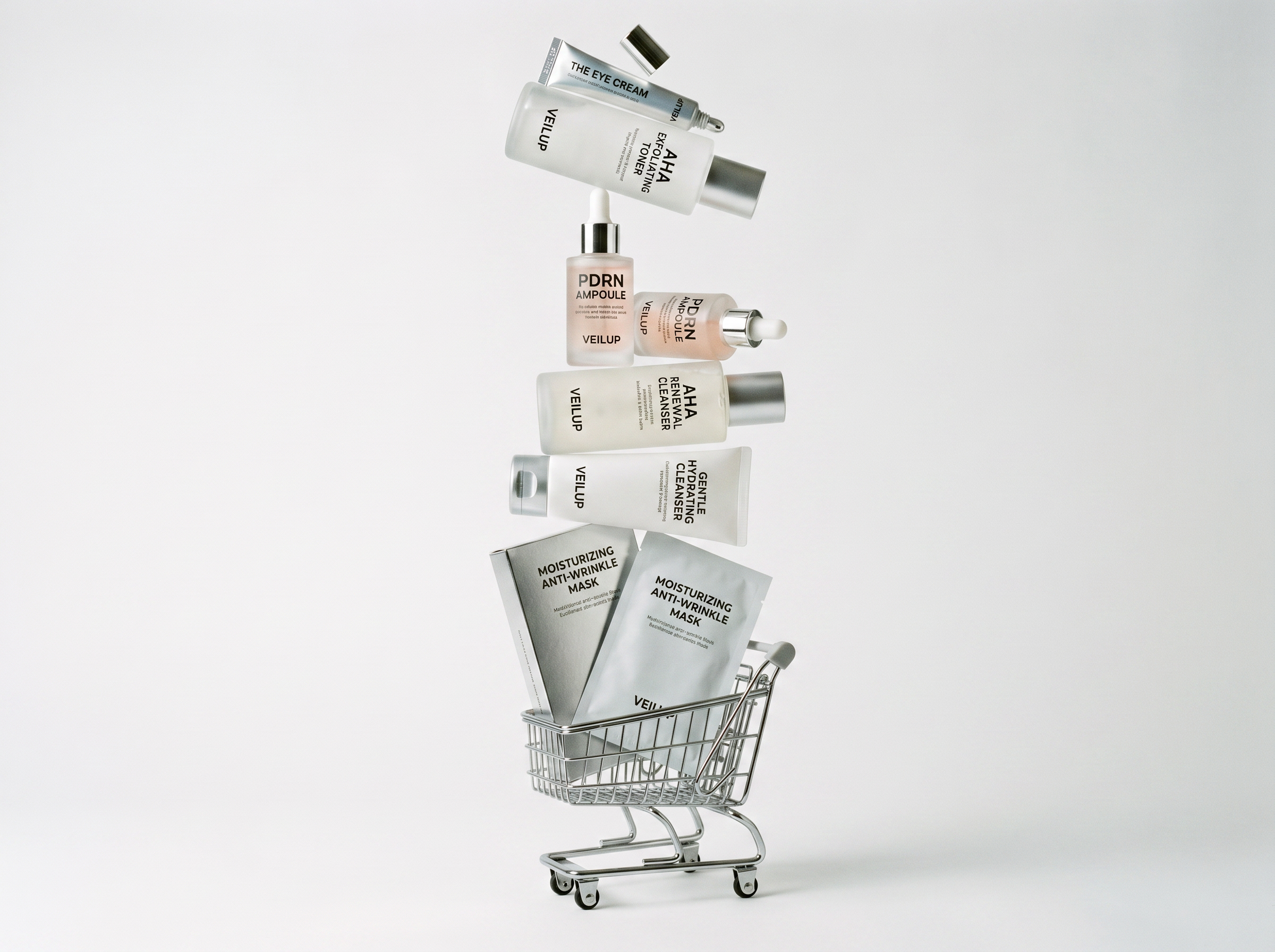
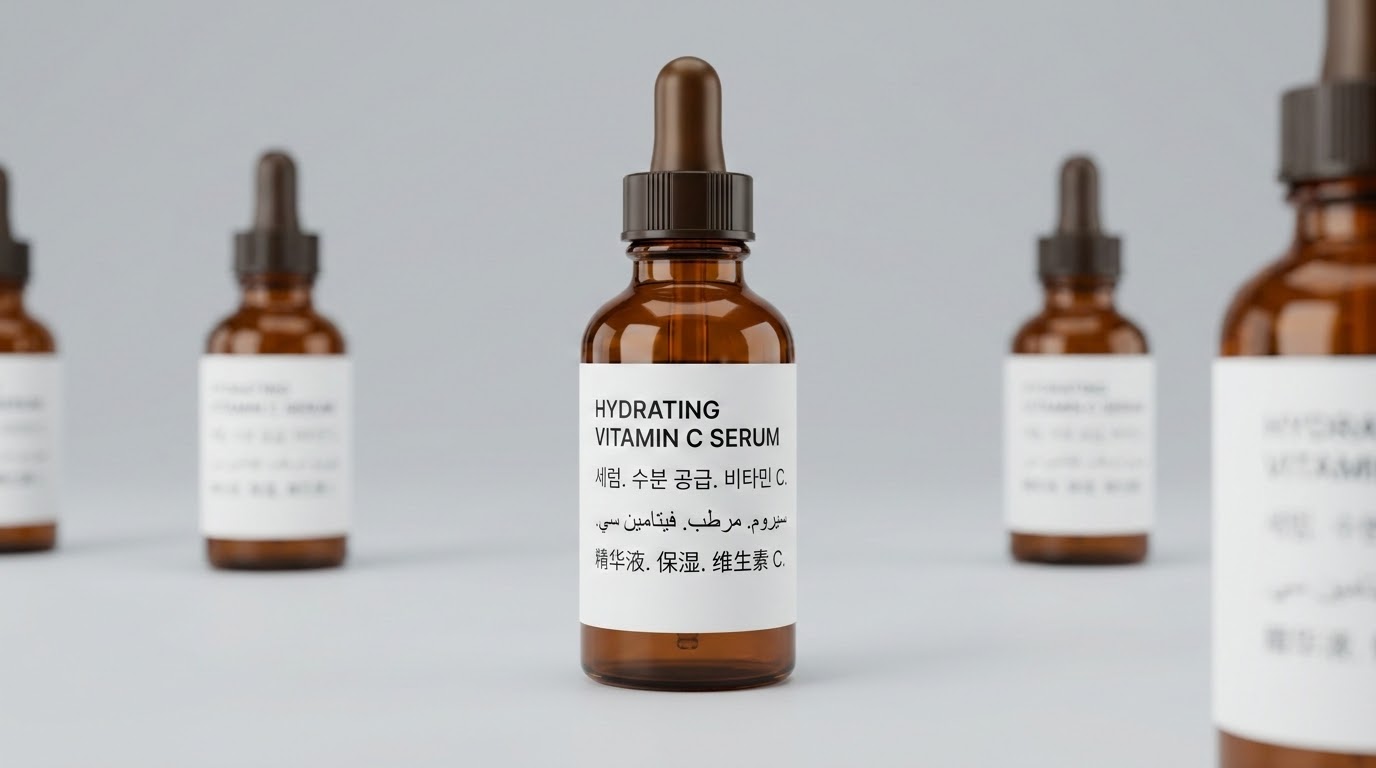
Ask any model to generate a product shot with "Hydrating Vitamin C Serum" on the label, and you'd get something like "Hrdyatign Vtmain C Seurm." Beautiful image, useless for marketing. For an industry where every letter on a label carries regulatory weight and brand equity, garbled text wasn't a minor annoyance—it was a dealbreaker.
That barrier fell in 2025. And in 2026, the technology has matured from breakthrough to production-ready infrastructure. If you're running a cosmetics brand and haven't rethought your content pipeline, you're already behind.
The Timeline: From Gibberish to Production-Ready
The text rendering problem plagued AI image generation from the start. DALL-E 2, Stable Diffusion, and early Midjourney versions (2022-2023) couldn't reliably spell even three-letter words. The underlying architecture, diffusion models operating in latent space, had no concept of characters or spelling.
The first real progress came in late 2023 with Ideogram v1 and DALL-E 3, which could handle short phrases. By mid-2024, Flux and Midjourney v6 pushed accuracy further, though longer text strings remained unreliable.
Then March 2025 changed everything. OpenAI launched GPT-4o's native image generation on March 25, followed by Ideogram 3.0 one day later. Both solved the text problem from different architectural angles—GPT-4o through an autoregressive approach that processes characters sequentially, Ideogram through dedicated text-processing mechanisms built by former Google Brain researchers.
But the real story is what's happened since.
Where We Are Now: The 2026 Landscape
The text rendering race has accelerated dramatically in the past year. What was a breakthrough in March 2025 is now table stakes, and the leading models have pushed far beyond basic accuracy.
GPT Image 1.5 launched December 16, 2025, delivering a generational leap over the already-impressive GPT-4o. The key upgrade: dense text rendering. Where GPT-4o handled headlines and short labels well, GPT Image 1.5 handles smaller, denser text with significantly improved accuracy, think ingredient lists, detailed product descriptions, and multi-paragraph layouts. It renders detailed markdown into believable newspaper-style layouts. Generation speed is 4x faster, and the API is 20% cheaper. For cosmetics brands producing high volumes of marketing assets, this changes the economics entirely.
Ideogram has pushed its accuracy to approximately 95% on text prompts, with over 4.3 billion style presets accessible via Style Codes. Its Style References feature lets brands upload up to 3 reference images to maintain visual consistency across generations—critical for maintaining brand identity across hundreds of marketing assets.
Google DeepMind entered the race in March 2026 with precision text rendering inside generated images, plus a game-changing feature: on-the-fly translation and localization. Their models use multilingual embeddings trained on datasets exceeding 1 billion image-text pairs, enabling accurate rendering of scripts like Arabic, Chinese, Korean, and Japanese directly within images. For global cosmetics brands, this means generating localized packaging and marketing assets without human translation teams for each market.
Midjourney V7, released in April 2025, brought a complete architecture rebuild with 30-40% fewer bad generations and character consistency across multiple images. However, its text accuracy still trails at roughly 40% compared to Ideogram's 95%, making it better suited for aesthetic-first imagery than text-heavy marketing assets.
Why Cosmetics Brands Specifically Cannot Ignore This
Most industries can tolerate imperfect text in AI imagery. Cosmetics cannot and the reasons go beyond aesthetics.
Regulatory compliance. Skincare and beauty products carry ingredient lists, usage instructions, and claims regulated by the FDA, EU Cosmetics Regulation, and similar bodies. An AI-generated image with misspelled ingredients isn't just embarrassing, it's a compliance risk.
Brand name integrity. When "CLINIQUE" renders as "CLNIQUE" or "Charlotte Tilbury" becomes "Charlote Tilbry," the image is unusable. Period. With 2026 models hitting 95% accuracy, this problem is effectively solved for short brand names and headlines.
Label density. Cosmetics packaging is text-heavy. A single product displays the brand name, product name, key ingredients, volume, usage directions, and marketing claims. GPT Image 1.5's dense text rendering capability was built for exactly this kind of complexity.
The visual-first economy. The AI in beauty and cosmetics market is projected to reach $8.1 billion by 2028 at a 20.1% CAGR. 76% of beauty consumers are open to AI-enhanced shopping experiences. The brands capitalizing on these tools first will own the visual landscape.
Five Use Cases That Are Now Production-Ready
1. Rapid Packaging Prototyping
The old process: brief a designer, wait days for concepts, iterate through revision rounds, produce final mockups. Now, a packaging designer prompts an AI platform with product name, claims, and design direction and receives production-quality concepts in seconds.
Brands like Rituals have already used AI to create visual assets, with their Creative Director noting that "AI can generate stunning environments and allows for the creation of elements that would be highly expensive or challenging to produce in real life."
2. Text-Rich Ad Creatives at Scale
Performance marketing for cosmetics demands volume. You need dozens of ad variations testing different headlines, benefit claims, and CTAs. With GPT Image 1.5's 4x speed increase and Ideogram's 95% text accuracy, you can generate 30+ ad variations in an afternoon, each with properly rendered product names, benefit text, and calls to action. Top-performing beauty ads in 2026 show UGC-style creative dominating at 36.8% of all top performers, but text-accurate AI imagery closes the gap for polished brand creative.
3. Instant Global Localization
Google DeepMind's on-the-fly localization changes the game for international launches. Generate product imagery with accurate text in English, Korean, Arabic, Chinese, and French—simultaneously—without separate photoshoots or design teams for each market. The model handles right-to-left scripts, character-based languages, and multilingual layouts natively.
4. Social Content with Embedded Typography
Instagram carousels, TikTok thumbnails, Pinterest pins—social content often needs text integrated into product imagery. Instead of photographing products then adding text in Photoshop, generate the complete visual in one step. Ideogram's Style Codes ensure typography consistency across entire campaigns.
5. Concept Testing Before Manufacturing
Before committing to a new product line, generate realistic product imagery—complete with accurate labels—for consumer testing. Show potential customers different packaging designs with correct brand names and ingredient callouts, gather feedback, and refine before spending on physical prototypes. AI-powered personalized product recommendations already convert 40% higher in beauty ecommerce.
The Authenticity Question: What the Data Says
Here's the tension every cosmetics CMO needs to navigate. AI-generated content is peaking in volume, but consumer trust in authenticity is rising simultaneously.
The data is clear: 67% of shoppers remain skeptical about AI-generated marketing materials. 81% of CMOs believe customers will pay more for human-created content, up from 65% in 2024. And UGC remains the dominant format in top-performing beauty ads.
This doesn't mean AI-generated imagery is dead on arrival. It means the winning strategy is hybrid:
- Use AI for speed and iteration: Packaging prototypes, ad creative variations, concept testing, internal reviews. These are volume tasks where AI saves weeks of production time.
- Use humans for final creative direction: AI generates the options; your creative director picks the winners. AI produces the volume; humans curate the quality.
- Be transparent about AI usage. Brands maintaining trust are clearly labeling AI-generated visuals and ensuring human oversight for customer-facing creative decisions.
- Pair AI imagery with authentic content. The formula that works: use AI to produce the brand-polished assets, but keep UGC and real customer content as the trust foundation.
L'Oréal, Unilever, and Rituals are already executing this hybrid approach—using AI to amplify human creativity, not replace it.
How to Start: A Practical Framework
Step 1: Audit your content pipeline. Identify where text-on-image creation is a bottleneck—packaging concepts, ad variations, social content, localization. Start with the highest-volume, lowest-risk use case.
Step 2: Choose the right tool for the job. GPT Image 1.5 excels at conversational, iterative creation with dense text. Ideogram leads in pure text accuracy (95%) and brand consistency via Style Codes. Google DeepMind's tools lead in multilingual localization. Test each with your specific needs.
Step 3: Build brand guardrails. Create a prompt library encoding your visual identity—colors, typography, tone, layout preferences. Use Ideogram's Style References or save effective prompts as templates.
Step 4: Establish a review workflow. Every AI-generated asset with text passes through human review before publication. Check spelling, regulatory accuracy, brand consistency. This takes seconds per image—a fraction of the production time saved.
Step 5: Measure and scale. Track content throughput, cost per asset, time from concept to publish, and performance of AI-generated vs. traditionally-produced content. Let data guide your scaling decisions.
The Bottom Line
In 2025, text-accurate AI image generation was a breakthrough. In 2026, it's infrastructure.
GPT Image 1.5 handles dense ingredient lists. Ideogram hits 95% text accuracy with brand-consistent styling. Google DeepMind generates localized packaging across languages in seconds. The tools aren't just good enough—they're production-ready.
The cosmetics brands integrating these capabilities into their content pipelines now are producing more assets, testing more variations, and launching in more markets at a fraction of the traditional cost. The gap between early movers and everyone else widens every month.
Ready to build an AI-powered content system for your cosmetics brand?
Book a free audit and we'll show you exactly where text-accurate AI image generation fits into your marketing pipeline.
More insights