
The UGC Playbook: How Skincare Brands Are Generating 10x More Content for Less

The skincare brands crushing it on paid social right now have one thing in common: their best-performing ads look nothing like ads. User-generated content — real customers showing real results in real environments — consistently outperforms polished brand creative by 2–4x in click-through rate and 30–50% in cost per acquisition. The reason is trust. A professional video says "our product is great." A real customer with good lighting and an iPhone says the same thing, and the audience actually believes it.
The problem isn't that brands don't understand UGC. It's that most brands treat UGC collection as a passive, unpredictable process — waiting for customers to post and hoping to repost it. That's not a strategy. In 2026, the most efficient skincare brands have systematized UGC into a reliable, scalable content production system that generates dozens of new ad-ready assets every month at a fraction of the cost of studio production.
The Problem: UGC Is an Afterthought Instead of an Infrastructure
Most brands think about UGC in one of two ways: organic reposting of customer content, or one-off creator gifting campaigns. Neither builds a sustainable content library. Organic reposting is unpredictable and rarely produces ad-ready content at scale. One-off gifting campaigns produce content once, then stop. What DTC skincare brands actually need is a creator network they can activate on demand — a pool of 30–50 creators who know your brand, have your products in hand, and can produce content to a brief within a week.
The content volume problem is also getting worse. Meta's ad system now recommends 50+ creative variations per campaign to enable proper algorithmic testing. That's not achievable with a monthly studio shoot. It's only achievable with a systematized UGC pipeline.
What UGC Actually Looks Like (When It Works)
The best UGC for skincare ads follows predictable formats that work regardless of creator or product. The "get ready with me" format: creator applies your product as part of their morning or evening routine, showing texture, application, and how it fits into a real regimen. The "results reveal": creator shows their skin before and after a course of use, with specific callouts to their skin concern and how your product addressed it. The "ingredient breakdown": creator explains why they chose your product specifically — what's in it, why it's different, what they were trying to solve. And the "product test": honest, direct-to-camera review comparing your product to what they were using before.
These formats work because they map to the five reasons someone buys a skincare product: they see results, they trust the creator, they understand the ingredients, they identify with the use case, or they perceive the value. Good UGC triggers at least two of these simultaneously.
5 Ways High-Performing Skincare Brands Build Their UGC Machine
1. Build a Micro-Creator Roster, Not a List of Influencers: The most efficient UGC content comes from creators with 5,000–50,000 followers — micro-creators with real engagement and real audiences who actually trust them. These creators don't expect large fees; a free product and a small usage fee ($75–$150 per deliverable) is often sufficient. Brands with a roster of 30–50 active micro-creators produce 8–12 new UGC assets per week at a total monthly cost well under $5,000 — an amount that wouldn't fund a single studio production day.
2. Write Creator Briefs That Specify Outcomes, Not Scripts: The fastest way to kill authentic UGC is to over-script it. Creators who sound like they're reading from a brief produce content that performs like an ad. Instead, write briefs that specify the outcome: "We want viewers to understand this serum is for oily, acne-prone skin and that the niacinamide helps minimize pores. Show us your honest experience." Give the talking point, not the script. Outcome-briefed UGC outperforms script-based UGC by 35% in view-through rate because it sounds like a real person talking, not a paid endorsement.
3. Seed Product Before You Need Content: Build a 30-day buffer. Send product to creators 30 days before you need the content — give them time to actually use the product and form real opinions. Rushed UGC where the creator has used the product for two days reads as inauthentic. Patience in the seeding phase produces content with real skin transformation stories, which are your highest-converting ad assets.
4. Rights and Usage Agreements From Day One: Always get written usage rights before you pay. A usage agreement should specify: platforms where content can be used (paid social, website, email, retail), duration of use (12 months minimum), and permission to edit or repurpose the content. Without clear rights, your best-performing UGC can be pulled by the creator at any time — removing a winning ad that's generating real returns. Most creators will sign standard usage agreements readily — the ask rarely derails a relationship when it's positioned as standard practice.
5. Identify Winners Fast and Scale Them: Run new UGC as dark posts with $20–30/day for 3 days. Any video achieving a hook rate above 25% (watch through 3 seconds) and a CTR above 1.5% is a winner. Take that creative, put real budget behind it, and test thumbnail variants, opening lines, and CTA overlays. Scaling one winning UGC video properly typically outperforms three mediocre videos by a factor of 3–5x on ROAS. The goal isn't volume for its own sake — it's volume to find the winners.
What to Build First
Start by identifying 10 micro-creators in your niche on TikTok and Instagram who are already talking about skincare products similar to yours. Reach out with a gifting offer and a clear brief. Get content from these 10 creators, test everything, identify your top two or three performers, and build your roster around creator profiles that match those winners.
The brands that will own their categories in 2026 aren't spending more on content production — they're producing smarter, faster, and more authentically. The UGC machine is how you get there.
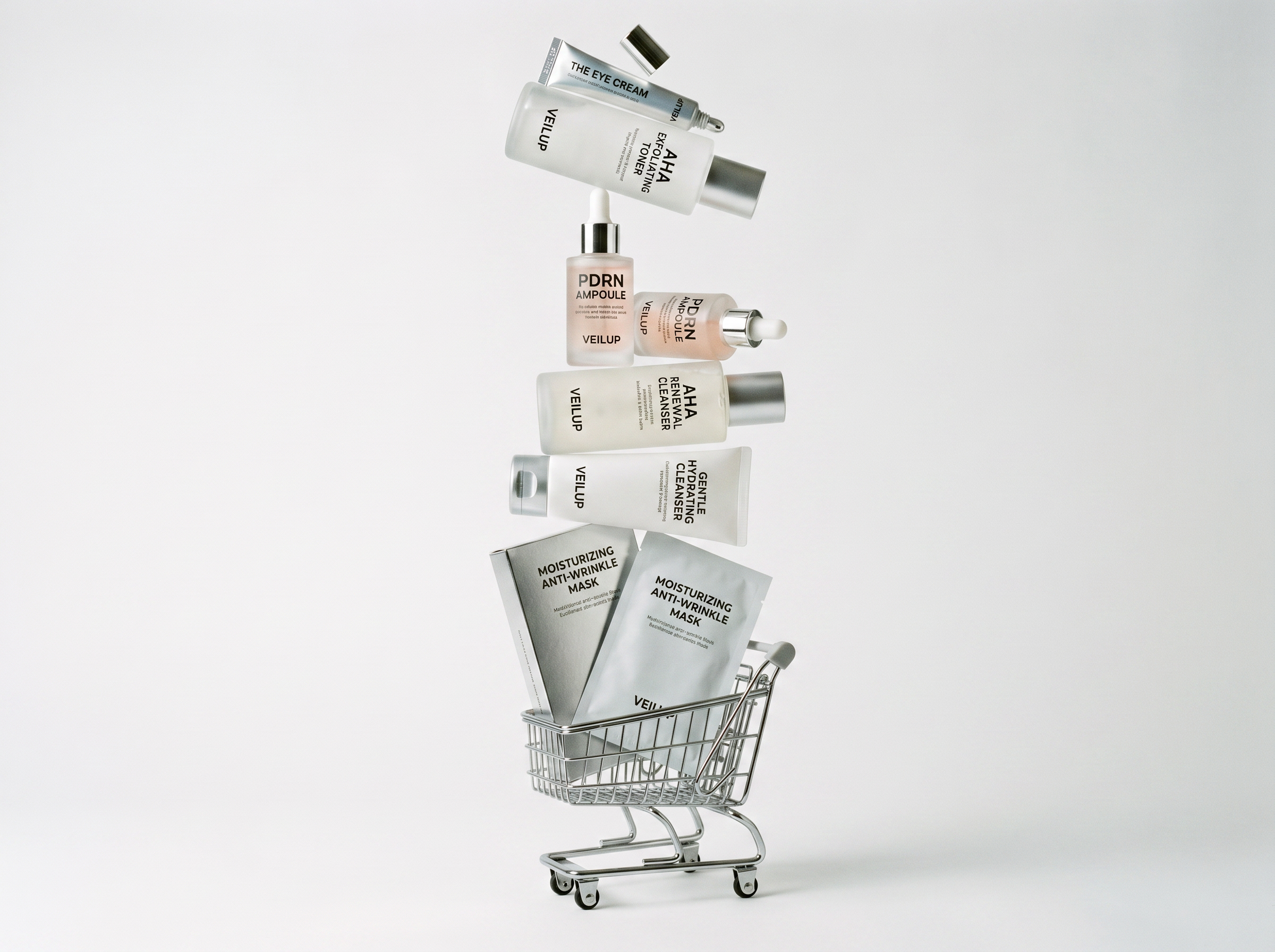
At Veilup, we help cosmetics and skincare brands build systematic UGC programs — from creator sourcing and briefing to content testing and paid amplification. If your brand needs more ad-ready content than your production budget allows, the playbook to get there is already here.
More insights