.png)
How to Position Your Skincare Brand in a Saturated Market (The 2026 Framework)

There are over 10,000 skincare brands competing for attention right now. Most of them say the same things: clean ingredients, dermatologist-tested, clinically proven, skin-transforming. When every brand says the same thing, no brand says anything. The founders breaking through in 2026 aren't the ones with the best formulas — they're the ones with the sharpest positioning.
Positioning isn't your tagline. It's the specific answer to a specific question: why should this exact customer choose your brand over every other option available to them? If your answer is vague, your marketing will be vague. And vague marketing in a saturated market gets ignored.
The Problem: Most Skincare Brands Position on Features, Not Territory
Feature-based positioning sounds like this: "We use 98% natural ingredients" or "Our formula is backed by 5 clinical studies." These are credibility signals, not positions. Every serious skincare brand can say something like this. A position is the territory you own in the customer's mind — the specific space no other brand occupies for them.
The root cause is usually founder-mode thinking. Founders know their formula is better, their sourcing is more thoughtful, their process is more rigorous. So they lead with the formula. But the customer isn't buying a formula — they're buying a solution to a problem, an identity, a feeling, or a promise. Positioning that doesn't connect to one of those four things will always underperform.
The Four Positioning Territories That Win in Beauty
The strongest skincare brand positions in 2026 cluster around four territories. You need to own exactly one of them — clearly and consistently.
1. Problem-First Positioning: Own a specific skin concern more credibly than anyone else. Not "for all skin types" — for this specific problem. Brands like Paula's Choice own efficacy for ingredient-curious problem-solvers. Naturium owns accessible science for budget-aware consumers. The question to ask: what is the one skin problem your brand solves better than anyone else can credibly claim? Lead with that. Everything else is secondary. Brands with problem-first positioning see 2–3x higher conversion rates from top-of-funnel ads because the customer immediately self-identifies as the right buyer.
2. Identity-Based Positioning: Some brands aren't selling a product — they're selling membership in a tribe. The customer doesn't just buy the product; they become the type of person who uses the product. This positioning works when your brand has a strong point of view about how beauty should be — minimalist, maximalist, science-first, ritual-first, K-beauty influenced, clean-label obsessive. The identity has to be real and specific. If it could apply to any brand, it's not a position. Identity-positioned brands command 15–25% price premiums and have significantly higher retention because switching brands feels like betraying an identity.
3. Proof-Led Positioning: Clinical data, before/after results, user transformation stories — when the evidence is so strong it becomes the position. This works particularly well for active-ingredient brands (retinol, AHA/BHA, peptides) where the customer is outcome-oriented and skeptical of marketing claims. The position becomes: "We're the brand you go to when you actually want results, not just good packaging." Proof-led positioning converts 40% better in performance marketing than aspirational creative for the over-35 demographic.
4. Origin or Ritual Positioning: Your brand is rooted in a specific tradition, geography, or practice that gives it a unique credibility no one else can claim. K-beauty heritage, Ayurvedic formulation, French pharmacy tradition, Korean skincare rituals — these positions work because they carry implicit authority. The customer believes your brand has access to knowledge or ingredients that mainstream brands don't. This is the positioning strategy behind the explosive growth of K-beauty brands in Western markets. Origin-positioned brands see 60% higher organic search click-through rates when the origin resonates with the target audience's aspiration.
The Positioning Test
Once you've drafted your position, run it through three questions. First: can any of your top five competitors say this about themselves right now? If yes, it's not a position — it's table stakes. Second: does this position attract a specific customer and repel others? Good positioning isn't for everyone. If your position appeals to everyone, it appeals to no one. Third: can you build a product roadmap, creative strategy, and community around this position for the next five years? Positioning is a long game — you need to be able to live inside it.
The brands winning right now picked a lane early and stayed in it. The brands struggling are trying to be everything to everyone — and ending up as nothing to anyone.
What to Build First
Start with a competitive audit. Pull your top five direct competitors and write out their positioning in one sentence each. Look for the gaps — the specific territories that are underclaimed or overcrowded. The overcrowded positions ("natural," "clean," "dermatologist-tested") are where the noise is. The unclaimed positions are where the opportunity is.
The brands that will own their categories in 2026 are already building the territory now. The window to plant a flag in an undercrowded space is shorter than founders think — because once a brand owns a position, it's very expensive for anyone else to dislodge them.
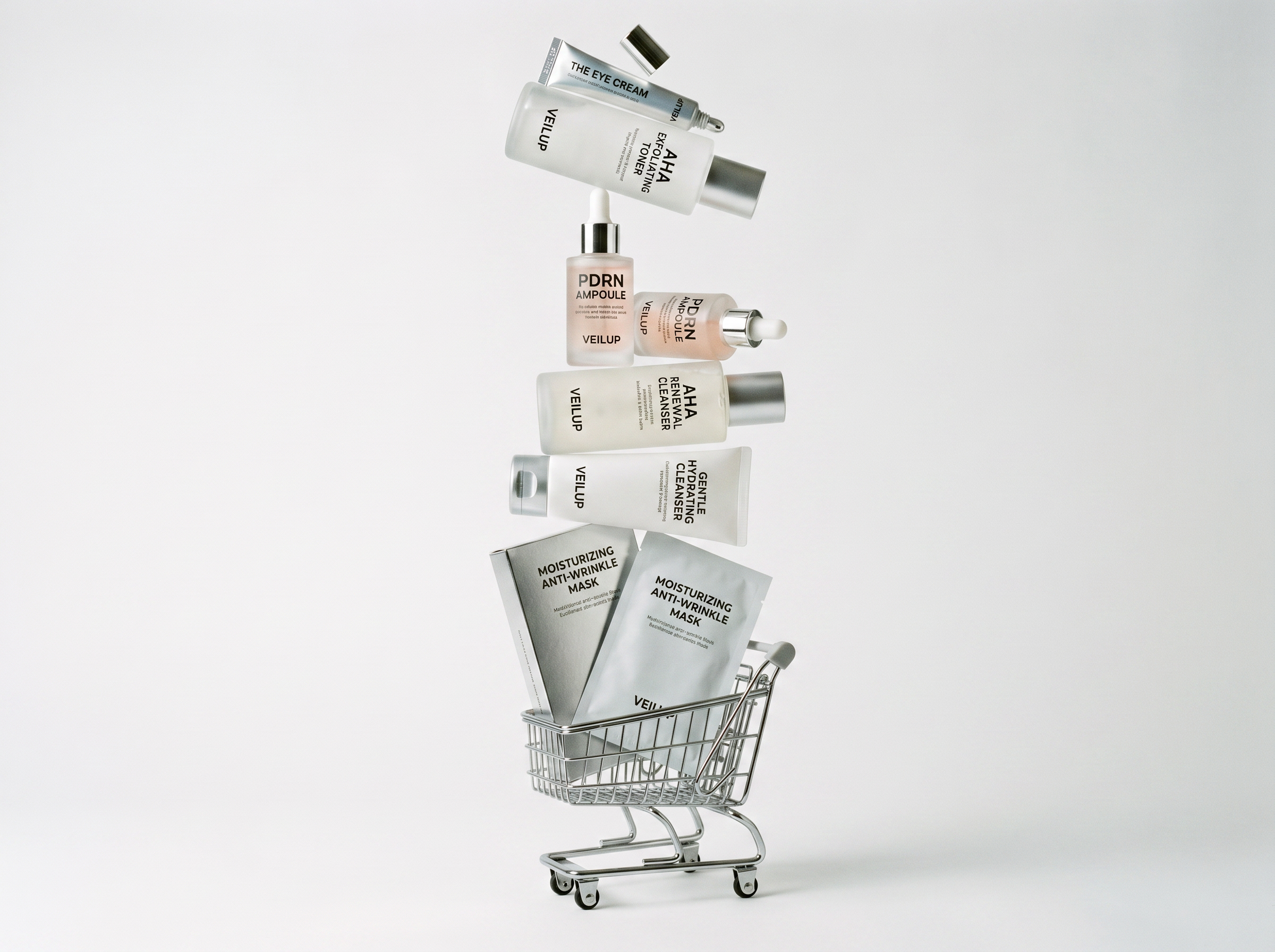
At Veilup, we help cosmetics and skincare brands define sharp, defensible positions and then build the marketing infrastructure to own them — from brand voice and creative strategy to paid social and SEO. If your brand's positioning feels fuzzy, the framework to fix it is already here.
More insights