The Non-Negotiable Tech Stack for Ecommerce Beauty Brands That Want to Scale in 2026

There's a version of your ecommerce business where every dollar you spend on ads is tracked to the penny, every customer gets a personalized journey from first click to fifth purchase, and your team spends its time on strategy instead of manually pulling reports. That version isn't a fantasy — it's what a properly stacked tech ecosystem looks like in 2026. Most beauty brands are running on 30% of the tools they need, wondering why their ROAS plateaus and their retention numbers don't budge.
The Problem: Most Beauty Brands Are Under-Tooled and Over-Spending
The average DTC beauty brand spends aggressively on paid acquisition and almost nothing on the infrastructure that converts and retains. Three out of four beauty customers browse and buy on mobile, yet most brands have never optimized their mobile experience beyond a Shopify theme. Retention rates in beauty ecommerce average just 20–30% after the first purchase — meaning most brands are burning ad budget replacing customers they already paid to acquire.
The issue isn't spend. It's architecture. The brands hitting 4x–6x ROAS consistently aren't outspending competitors — they're out-tooling them. They've built a stack where acquisition data feeds retention systems, retention systems feed creative decisions, and every touchpoint from ad to unboxing is informed by real behavioral data. This is achievable for any brand at scale. Here's the stack that makes it happen.
Layer 1: Your Email and SMS Backbone
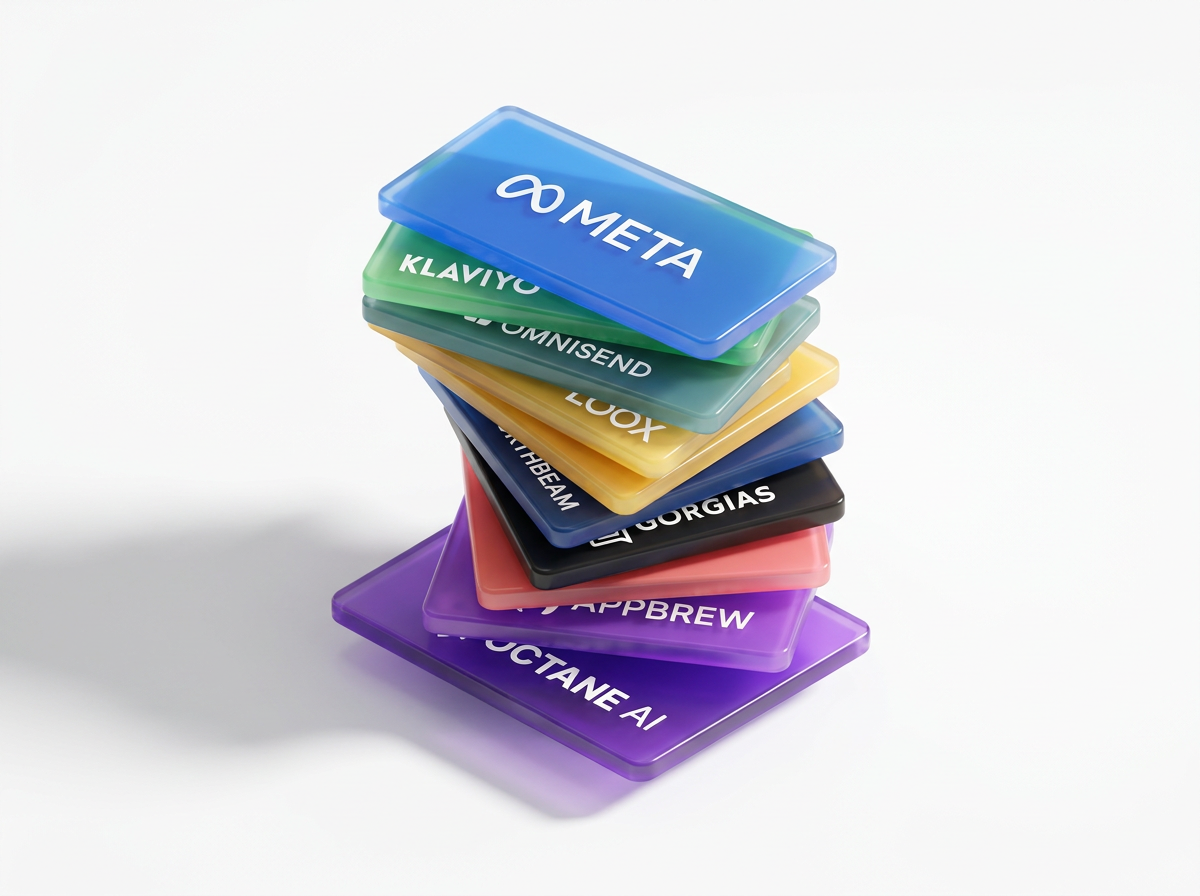
If you're not on Klaviyo, you're leaving retention revenue on the table. Full stop. Klaviyo's integration with Shopify allows flow triggers based on purchase behavior, browse behavior, predictive LTV, and skin type quiz data. Flows built on behavioral signals — not just time-based sequences — consistently outperform generic nurture sequences by 40–60% on revenue per recipient.
For brands scaling past $1M, layer Omnisend or Postscript for SMS to complement Klaviyo email. SMS in beauty sees open rates above 90% and click rates 5–8x higher than email — particularly for flash sales, restock alerts, and personalized replenishment reminders. Skincare replenishment is one of the highest-converting SMS use cases in any category because the repurchase cycle is predictable.
Layer 2: Reviews, UGC, and Social Proof Infrastructure
Beauty is a trust category. A customer will not buy a serum from a brand they don't believe in, no matter how good the creative is. Loox and Stamped.io are the two platforms that turn your post-purchase experience into a social proof engine — collecting photo reviews, before-and-after imagery, and star ratings that appear everywhere from your PDP to your Meta dynamic ads.
Brands with 50+ photo reviews on a product page see conversion rates 2.4x higher than those with text reviews alone. For skincare especially, seeing a real person's skin transformation is the single most persuasive piece of content you can put in front of a new customer. Your review infrastructure should be generating that content automatically, not relying on manual outreach.
Layer 3: Personalization and Product Discovery
The skincare purchase decision is personal. Octane AI is the category leader for quiz-to-product flows on Shopify — allowing brands to match customers to specific SKUs based on skin type, concern, lifestyle, and budget. Brands using Octane AI quizzes report average order values 30–50% higher than customers who browse without a personalized recommendation.
For mobile-first personalization, Appbrew builds Shopify-native mobile apps that drive 6x engagement, 3x conversions, and 1.2x average order values specifically for beauty brands. In a category where 75% of browsing happens on mobile, a native app experience isn't a luxury — it's a conversion multiplier.
Layer 4: AR and AI-Powered Try-On
Virtual try-on has crossed from novelty to expectation in the color cosmetics and skincare categories. Perfect Corp and ModiFace are the two platforms powering AI-driven virtual try-on, skin diagnostics, and personalized shade matching across beauty ecommerce. Brands with AR try-on experiences report return rates 30–40% lower than brands without it — because customers know what they're buying before it ships.
As TRIBE v2 and computational neuromarketing reshape how brands understand neural engagement with visual stimuli, AR tools will become the front-line testing ground for which product presentations actually convert at the brain level, not just the click level.
Layer 5: Customer Support and Retention Operations
Gorgias is the CX platform built specifically for Shopify brands — centralizing all support tickets, integrating with your order data so agents can see full purchase history in one view, and automating responses to the top 10–15 recurring questions (ingredient queries, routine advice, shipping timelines). Brands using Gorgias report 30% faster first response times and 25% lower support costs at scale — critical when you're growing and your ticket volume is multiplying faster than your team.
Layer 6: Analytics and Attribution
Without clean attribution, you're flying blind on every marketing decision you make. Triple Whale or Northbeam are now considered table stakes for beauty brands spending $30k+/month on Meta and Google. These platforms pull together your Shopify revenue data, ad spend, and email performance into a single source of truth — giving you accurate CAC, ROAS, and LTV by channel without relying on Meta's self-reported numbers, which consistently overcount conversions by 20–40%.
The Stack in Practice
The brands that scale past $5M in beauty ecommerce aren't running the most sophisticated individual tools. They're running tools that talk to each other. Your quiz data feeds your Klaviyo segments. Your Klaviyo segments feed your Meta custom audiences. Your Meta performance feeds your creative decisions. Your Gorgias tickets surface your product-market fit gaps. This is the flywheel that compounds. Each layer makes every other layer smarter.
Building this stack isn't a six-month project. With the right implementation partner, the core layers can be live and integrated within 30 days. At Veilup, we help cosmetics and skincare brands architect and activate exactly this ecosystem — so your tech is working as hard as your ad budget.
More insights