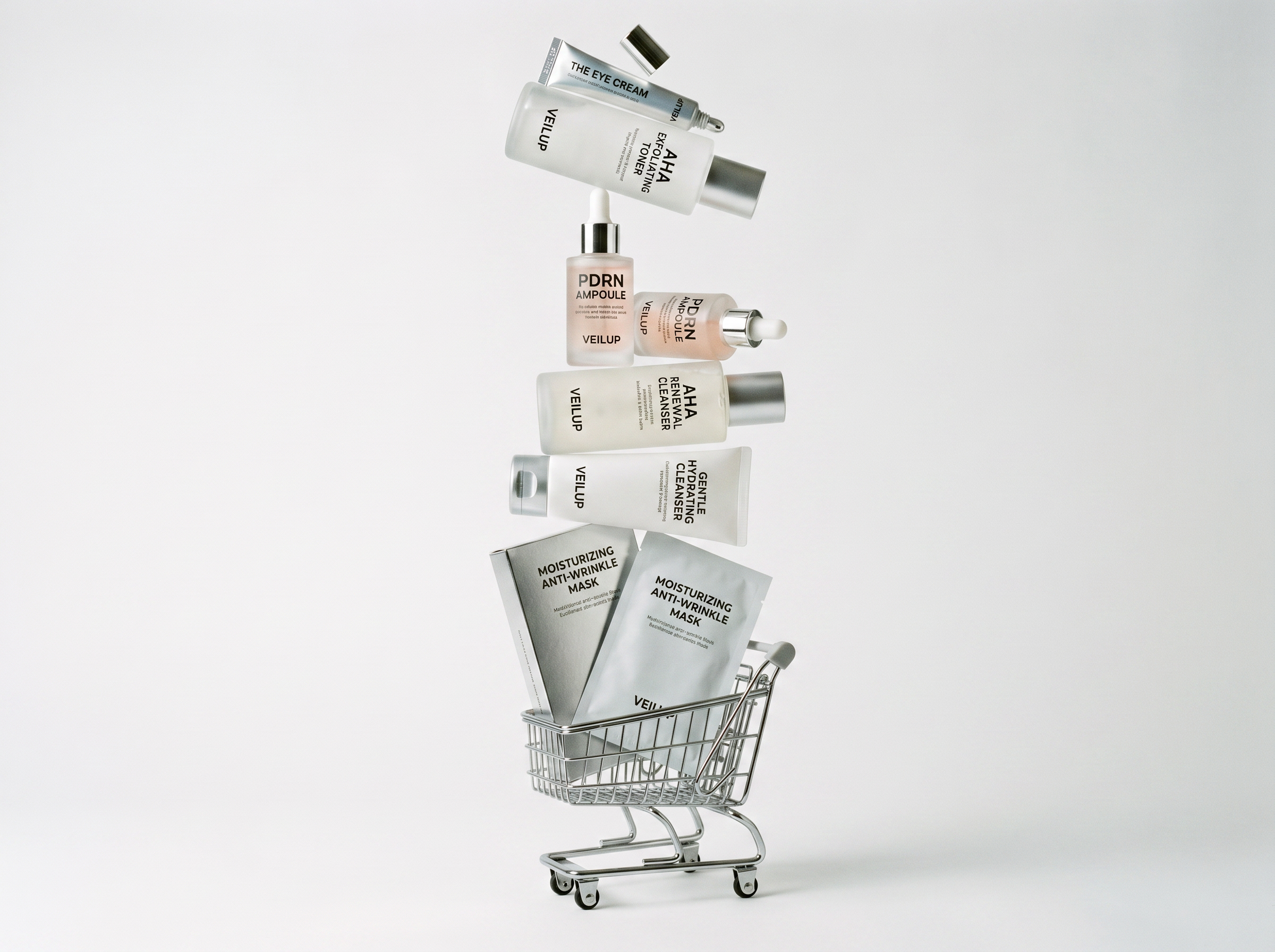

The 2026 Guide to AI in Skincare E-commerce: Scaling Beyond Human Limits

The problem. Why should we care right now?
The skincare e-commerce industry faces challenges that echo louder as we approach 2026. A saturated market, volatile customer expectations, and the ceaseless pressure to innovate leave brands struggling to maintain an edge. The old way of doing business — relying on intuition, limited data insights, and manual interventions — can no longer keep up with the demands of a digital-first world. Brands that ignore these needs risk being swallowed by their competitors.
Consider this: According to Statista, the global skincare market is projected to reach $189.3 billion by 2025, with e-commerce representing a significant share of this growth. As consumers become more discerning and tech-savvy, the old ways of guessing customer preferences and restocking shelves blindly are not just inefficient—they’re obsolete. This urgency is compounded by the fact that 2025 will be marked by an expected 25% increase in consumer demand for hyper-personalized skincare solutions. The question is no longer if AI will change the landscape but how brands can leverage its infrastructure to survive and thrive.
This shift presents a critical juncture. Ignore it, and your brand becomes a relic. Embrace it, and your brand turns a strategic corner towards exponential growth.
Why this matters now. Market data, platform shifts, what changed.
The confluence of market dynamics and technological advancements has reshaped the e-commerce landscape overnight. In 2022, we observed a pivotal moment: AI began to burrow its way into the mainstream operations of e-commerce, setting the stage for the transformations we witness today.
According to a McKinsey report, 75% of organizations that have adopted AI are already reporting that it has increased revenue through enhanced customer experiences or reduced costs. Meanwhile, Gartner predicts that by 2026, more than 60% of product recommendations in the e-commerce industry will be powered by AI.
The landscape is further revolutionized by the rise of platforms like Facebook, which now offer robust AI-driven marketing automation systems. Facebook's Dynamic Ads, which utilize machine learning algorithms to display the right product to the right user at the right time, boast a 47% improvement in click-through rates compared to static campaigns. This kind of shift represents a seismic leap from previous marketing paradigms that relied substantially on human guesswork.
Hyper-personalization, driven by AI's ability to analyze and interpret vast data sets, allows skincare brands to curate unique customer experiences. This is where AI excels — far beyond the limits of human capabilities. As a result, businesses must realign their strategies to leverage these technologies effectively, to not only meet consumer expectations but exceed them.
Core insight with specific examples and data points.
Hyper-personalization in skincare e-commerce isn’t just about targeting consumers with the right products. It’s about creating an intimate understanding of each unique individual’s needs and delivering a personalized experience at every touchpoint, something modern consumers demand with increasing conviction.
Take Proven Skincare, a brand that uses AI algorithms to process data from over 8 million customer reviews and 100,000 skincare products to formulate customized skincare solutions. The company has harnessed AI's capability to distill complex datasets into actionable insights, thus providing tailored regimens for its clientele. According to their internal metrics, they've witnessed a 30% repeat purchase rate, significantly higher than the industry average of 20%.
Moreover, AI empowers predictive inventory management — a previously uncharted territory for many skincare brands still clinging to outdated inventory prediction methodologies. Olay, for example, leverages AI to anticipate demand fluctuations with remarkable precision, helping reduce stockouts by 32% and overstock issues by 50%.
Such advancements democratize access to data previously only available to industry juggernauts. The result is a more leveled playing field, allowing smaller brands to punch above their weight by predictive shopping behaviors, thus optimizing both marketing strategies and supply chains.
These examples underscore a defining truth: AI in skincare isn’t just a tool—it's the scaffolding upon which future success is built.
Another angle — frameworks, case studies, comparisons.
To truly grasp AI's transformative power in skincare e-commerce, we must explore its utility through contrasting frameworks and case studies.
The old way of customer service relied on generalized FAQs and manual customer support. Compare this with Dermalogica's AI-enhanced framework. They have integrated a chatbot powered by natural language processing (NLP) that efficiently resolves 90% of customer inquiries without human intervention, delivering immediate, 24/7 support. With AI, Dermalogica has elevated customer service from a reactive model to a proactive engagement strategy, improving customer satisfaction rates by 40%.
On the inventory side, traditional supply chain models forecasted demand based on historical sales data alone. Today, brands like Sephora employ AI-driven predictive analytics frameworks that integrate real-time data sets, including social media trends, weather patterns, and regional holidays, to predict sales cycles. This has enabled Sephora to decrease inventory holding costs by 15% while ensuring higher product availability.
The common thread in these case studies is AI's ability to synthesize copious amounts of data to provide actionable insights faster and more accurately than any human or conventional system could. It’s not just a question of efficiency; AI represents a paradigm shift in operational capability.
Through these case studies, it’s evident that brands willing to radically adapt AI into every facet of their frameworks are the ones setting benchmarks for success.
A third perspective — what most people miss.
Despite the substantial benefits of AI, there's a perspective that many brands overlook: technology's ability to foster empathy and connection. The typical narrative pigeonholes AI into operational efficiency, yet its potential to enhance authentic customer relationships remains underemphasized.
Consumers still yearn for humanized experiences, even in digital interactions. According to Forrester, 73% of consumers state that valuing their time is the most important thing a company can do to provide them with good service. Here, AI can play a transformative role by freeing human capital from mundane tasks, enabling deeper, more meaningful customer connections.
For instance, Glow Recipe has implemented AI to segment their customer base according to purchasing patterns and skincare concerns, allowing their customer service teams to initiate personalized follow-ups and targeted communication campaigns. While AI executes the groundwork, the human touch in outreach fosters loyalty and enhances brand perception.
Moreover, the over-reliance on data without the balance of human ethics can lead brands astray. As AI makes its predictions, a human lens is critical to interpret and implement these insights responsibly. This synergy between man and machine ensures that technology empowers brands without compromising ethical integrity or customer trust.
Brands must recognize that AI should amplify human capabilities, not replace them. The blend of technological efficiency and empathetic customer interaction provides a nuanced yet essential competitive edge.
Practical application — step by step, how to start.
Transitioning into an AI-driven e-commerce operation isn’t an overnight endeavor but a process that requires strategic planning and execution. Here’s a practical, step-by-step guide to integrate AI into your skincare e-commerce strategy:
Step 1: Define Clear Objectives
- Determine specific goals AI should achieve, whether it's improving customer personalization, enhancing inventory management, or optimizing marketing spend.
Step 2: Data Ecosystem Assessment
- Evaluate the current data infrastructure. Assess if your existing data collection encompasses the breadth of consumer insights needed to fuel AI systems.
- Invest in data cleansing and integration processes to ensure high data quality and accessibility.
Step 3: Select the Right AI Tools
- Not all AI systems are created equal. Choose platforms with proven success in e-commerce applications for skincare that align with your objectives, such as machine learning-driven customer segmentation tools or NLP-powered chatbots.
Step 4: Staff Training and Restructuring
- AI adoption demands a cultural shift. Upskill staff on how to leverage AI insights for business enhancements.
- Define new roles where humans and AI collaborate, such as data analysis specialists who can interpret AI outputs into actionable strategies.
Step 5: Pilot Projects
- Implement small-scale AI projects to measure their effectiveness and scalability before a full-scale rollout.
- Evaluate these pilot projects continuously, using metrics that align with your defined objectives from Step 1.
Step 6: Customer-Centric Feedback Loop
- Establish mechanisms to capture and analyze customer feedback on AI-driven interactions, feeding insights back into AI systems to improve them continuously.
Step 7: Continual Optimization
- AI is not static; keep refining models through machine learning updates and by incorporating new data insights to maintain competitive advantages.
Following these steps will transform AI from mere potential into a tangible component of business strategy, driving growth and innovation in the skincare e-commerce sector.
Closing — tie back to Veilup.
As the skincare e-commerce market hurtles towards 2026, the pressure to innovate beyond human limits has never been more pronounced. AI represents more than a set of tools—it is the very infrastructure upon which future success must be built. From hyper-personalization to predictive inventory management and automated marketing, AI is reshaping the landscape in ways that demand action.
Veilup stands at the forefront of this transformation. Our expertise in harnessing AI to elevate brands is your gateway to navigating this complex terrain. With tailored strategies and cutting-edge technology solutions, we empower e-commerce businesses to leap from reactive to predictive, transforming how they meet consumer demands and setting new industry benchmarks.
*Book a free audit and we will show you where to start.*
More insights